
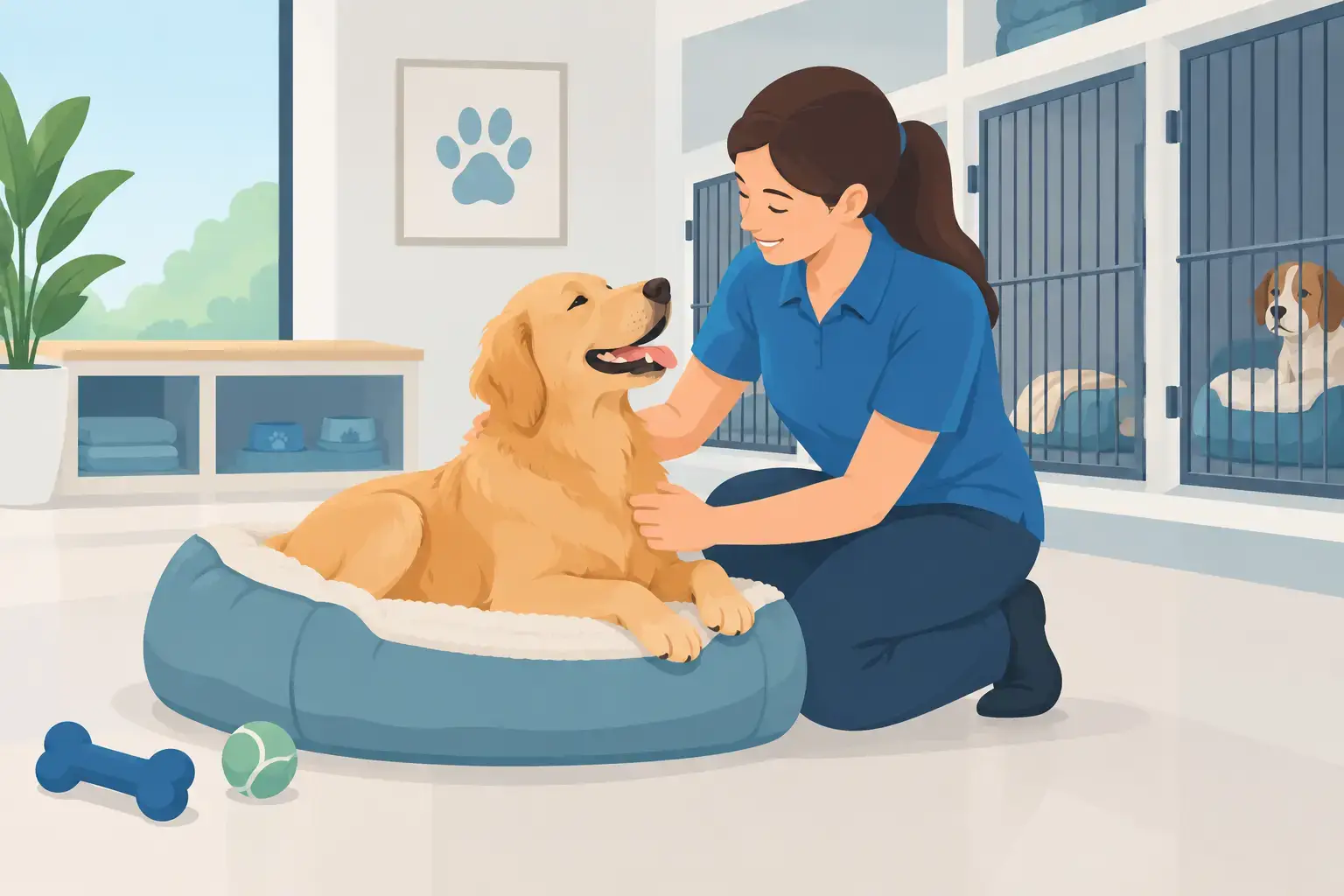
A good dog boarding example starts before the suitcase comes out. If your dog is used to breakfast at 7:00 a.m., a favorite bedtime treat, and a certain word for going outside, those small details can help make an overnight stay feel more familiar. Clear information gives your boarding team a better chance to care for your dog the way you do at home.
For Kansas City area families, boarding often comes up around work travel, school breaks, weddings, family visits, and last-minute changes in plans. The goal is not to make every part of your dog’s routine identical. It is to share the information that matters most, choose a supervised care setting, and prepare your dog for a safe, comfortable stay.
A practical dog boarding example
Imagine that the Carter family from Olathe is taking a five-day trip. Their dog, Scout, is a friendly three-year-old Labrador mix who enjoys people, eats dry food twice a day, and takes a daily joint supplement. Scout has attended supervised group play before but can become uneasy during thunderstorms.
When the Carters make their boarding reservation, they provide Scout’s dates, emergency contacts, feeding instructions, medication details, veterinarian information, and any behavior notes that could affect his care. They also ask what the facility needs before drop-off, including required records, meal packaging preferences, check-in times, and whether a trial visit or interview is appropriate.
Their written care note might look like this:
Scout’s boarding stay: Tuesday through Sunday. Feed 1 1/2 cups of his regular food in the morning and evening. Give one joint supplement with breakfast. He responds well to “Scout, come” and “place.” He enjoys tennis balls but may guard them around unfamiliar dogs, so do not leave one with him in a group setting. During storms, he settles more easily in a quieter area with calm handling. Call the Carters first for routine questions, and contact their veterinarian for urgent medical guidance.
That is a useful boarding example because it is specific without being overwhelming. The team does not need a page-by-page biography. They need accurate instructions that affect Scout’s food, health, comfort, and safe interactions.
What to share when you make a reservation
A boarding reservation is more than picking dates. It is a chance to make sure the facility and your dog are a good fit. Start with your dog’s age, breed or size, usual temperament, and prior experience with daycare, boarding, grooming, or group play. A dog that is social at the dog park may still need time to adjust to a new environment, and a dog who prefers people to other dogs may do better with a care plan that reflects that preference.
Be direct about health needs. Tell the boarding team about medications, food allergies, mobility concerns, anxiety triggers, recent illnesses, and any history of escaping, jumping fences, resource guarding, or reacting to other dogs. These details are not a reason to be embarrassed. They help staff make better day-to-day decisions and prevent avoidable problems.
It also helps to explain your dog’s normal routine. Include meal times, portion sizes, potty habits, sleep preferences, and commands your dog knows. If your dog needs food softened with water, a pill tucked into a treat, or a slower approach around strangers, put it in writing.
Pack for consistency, not clutter
Bring the items your dog truly needs and confirm the facility’s policies before packing. Many boarding locations have specific rules about outside food, bedding, toys, treats, and medication containers. Following those guidelines makes check-in easier and helps staff keep belongings organized.
For most dogs, the essentials are enough: clearly labeled food for the full stay, medications in their original containers, written instructions, current contact information, and any approved comfort item. Portioning food by meal can be especially helpful for longer stays. Label each bag or container with your dog’s name, the date, and the meal time.
A familiar blanket or durable toy may help some dogs settle, but not every item is a good choice for boarding. Skip anything valuable, easily destroyed, or likely to create a problem during supervised care. If your dog is known to chew fabric or swallow pieces of toys, tell the team rather than assuming a comfort item will be safe.
Plan the drop-off with your dog in mind
The best drop-off is calm and prepared. Complete paperwork and provide records ahead of time when possible, then allow enough time on the day of your reservation to review last-minute instructions. Rushing in after a hectic drive can make both you and your dog more anxious.
Keep your goodbye warm but brief. Dogs often take their cues from their people. A long, emotional farewell can make the transition harder, especially for a dog who already notices changes in routine. Bring your dog in on leash, hand over the items staff have approved, and let the team begin helping your dog get acquainted with the space.
If your dog has never boarded before, a shorter stay can be a practical first step. One overnight visit may tell you more than a long trip does. Some dogs settle quickly, while others need a little time to learn that their owner returns after care. There is no shame in starting small.
Questions that help you choose boarding care
The right boarding choice depends on your dog’s needs, not just the closest available opening. Before booking, ask how dogs are supervised, how feeding and medication instructions are handled, what the daily schedule looks like, and how the team communicates if a concern comes up.
You may also want to ask whether dogs have opportunities for activity, rest, and individual attention. Active dogs often benefit from structured play or daycare participation, while older dogs and dogs who tire easily may need a quieter routine. More activity is not automatically better. The right amount is the amount your dog can handle safely and comfortably.
Ask about emergency procedures and what information the facility needs from your veterinarian. You should understand how staff will reach you, who can make decisions if you are unavailable, and what happens if your dog needs medical attention. A dependable provider will welcome practical questions because clear expectations protect everyone involved.
At LifeTime Pet, local dog owners can arrange supervised boarding care while also taking care of everyday food and supply needs in one stop. That convenience can be especially helpful before travel, when there is already plenty to organize.
Make the return home easier
When you pick up your dog, expect a transition period. Some dogs come home ready for a long nap after a busy stay. Others may be extra excited, drink more water than usual, or want to stay close to you for a day or two. Give them a quiet evening, return to their regular feeding routine, and watch for anything that seems unusual.
Avoid making major changes right away. A dog who spent several days around new sounds, people, and routines may simply need rest. If you have a concern about appetite, medication, energy level, or behavior, contact the boarding provider and your veterinarian as appropriate.
For the next stay, make a few notes about what worked. Maybe pre-portioned meals made check-in faster, a shorter goodbye helped, or your dog did best with a quiet rest period after returning home. Each boarding visit gives you a clearer picture of the care plan that helps your dog feel secure.
A thoughtful boarding plan is one of the kindest things you can do before leaving town. Give your care provider honest details, keep instructions simple, and choose a setting where your dog can be supervised by people you trust. Then you can focus on your trip knowing your dog’s daily needs have not been left to guesswork.