
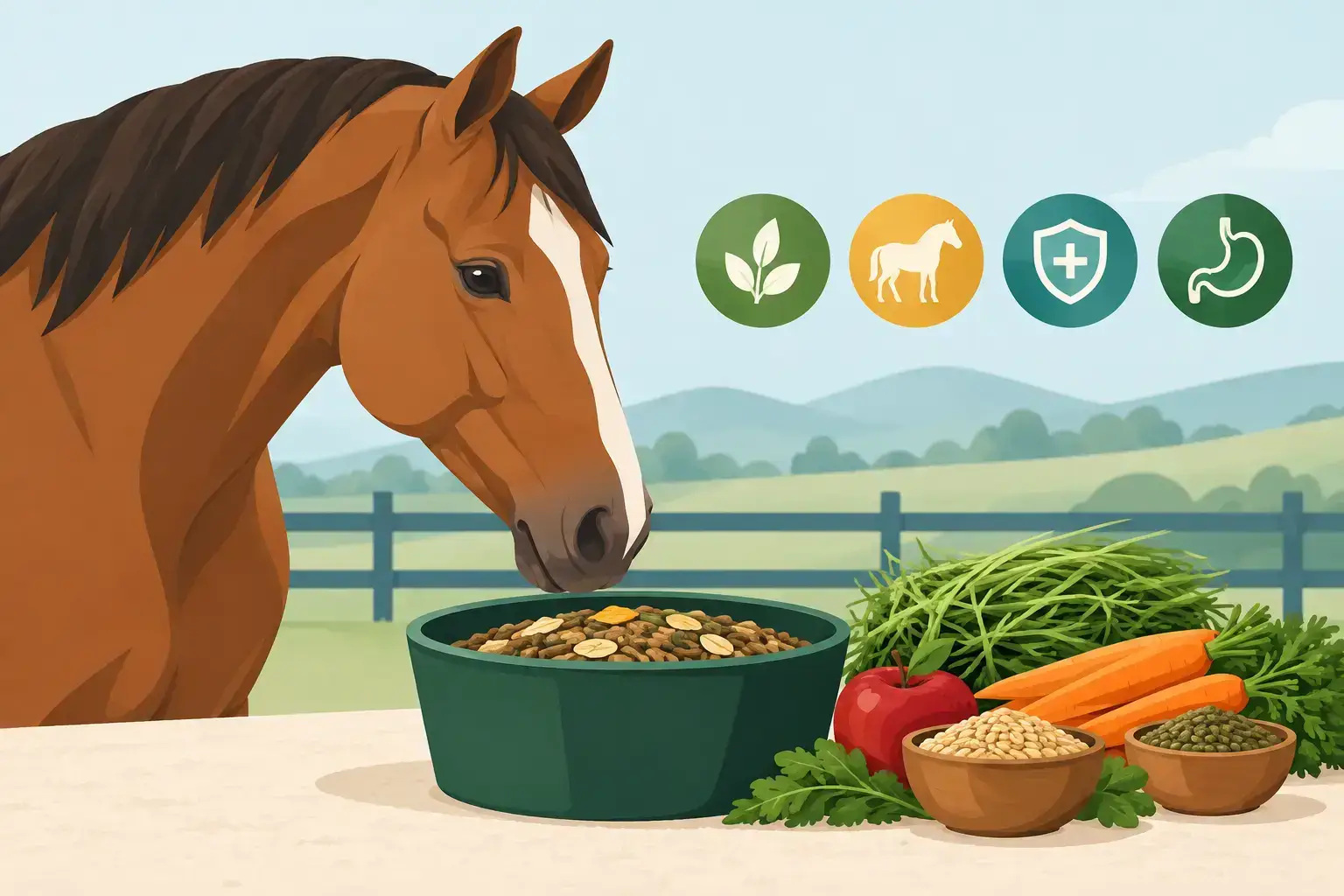
A horse can look hungry while carrying too much weight, or clean up every grain of feed while still missing a key nutrient. That is why equine nutrition is not simply a matter of filling a bucket. It is about matching forage, feed, water, minerals, and daily management to the individual horse in front of you.
For horse owners around the Kansas City area, feeding also changes with the weather. A horse living mostly on pasture in spring has different needs than one eating stored hay through a cold, dry winter. Work level, age, dental health, body condition, and access to quality forage all affect the plan.
Start Equine Nutrition With Forage
Forage should be the foundation of most healthy horses’ diets. Horses are built to graze and consume small amounts over many hours. Hay, pasture, or a combination of both provides fiber that supports normal digestive function and helps keep horses occupied between meals.
A common starting point is to provide forage at roughly 1.5% to 2% of a horse’s body weight per day on a dry-matter basis. For a 1,000-pound horse, that often works out to around 15 to 20 pounds of hay daily, though the actual amount depends on the hay’s moisture content, the horse’s condition, and how much pasture it receives.
Not all hay is alike. Grass hay is often a practical choice for easy keepers and many adult horses at light work. Alfalfa hay can provide more protein, calories, and calcium, which may be helpful for some growing horses, hard keepers, or horses with higher energy demands. It can also be too calorie-dense for a horse that gains weight easily. A mixed grass and alfalfa hay can be a useful middle ground.
Appearance alone does not tell the whole story. Hay should smell fresh, be free of visible mold and excessive dust, and have been stored dry. When possible, a hay analysis gives a clearer picture of protein, sugar, fiber, and mineral content. That information is especially valuable for horses with metabolic concerns, insulin dysregulation, laminitis history, or unexplained weight changes.
Pasture counts as forage, but it is not always predictable forage. Grass growth, rainfall, fertilizer use, and time of year can change its nutrient content. Fast-growing spring grass may be more than an easy keeper needs, while a dry or overgrazed pasture may contribute very little to the diet.
Feed Concentrates Only When They Have a Job
Grain and commercial feeds are useful tools, not automatic requirements. A horse in light work with good-quality forage and an appropriate vitamin and mineral source may not need much, if any, concentrated feed. Adding grain simply because a horse seems interested at feeding time can create excess calories without improving nutrition.
Concentrates may make sense for horses that cannot maintain weight on forage alone, horses in regular training, growing horses, broodmares, or seniors that struggle to chew long-stem hay. The right choice depends on what the horse needs more of: calories, protein, fat, fiber, or specific nutrients.
Read the feeding directions on every bag. A fortified feed is formulated to provide its intended vitamins and minerals only when fed at the recommended amount. If a horse receives just a small scoop for flavor or medication, it may be getting too few nutrients from that product. In that case, a ration balancer or concentrated vitamin and mineral supplement may be a better fit. Feeding less than the label recommendation is not always wrong, but it should be a deliberate choice rather than a guess.
Make changes gradually. Switching hay, increasing grain, or changing to a richer feed too quickly can upset the digestive system and raise the risk of colic or other problems. Introduce new feeds over about seven to 10 days when possible, and make bigger changes even more slowly for sensitive horses.
Water, Salt, and Minerals Matter Every Day
Fresh, clean water is one of the most important parts of a feeding program. A horse that does not drink enough is at greater risk for dehydration and impaction colic, especially during freezing weather, travel, or periods of hard work. Check troughs and buckets daily, keep ice from limiting access in winter, and clean containers regularly.
Provide plain loose salt or a salt block year-round. Horses need sodium, and forage alone usually does not supply enough. Loose salt can make it easier to see whether the horse is consuming it, although some horses do well with a block. Horses sweating heavily may need additional electrolytes, but those products should be used according to the horse’s workload, weather conditions, and water intake.
Mineral needs are more complicated than salt alone. The mineral balance in hay and pasture varies by region and field, so a broad-spectrum horse mineral or ration balancer can help fill common gaps. Avoid stacking multiple fortified feeds and supplements without checking labels. More is not automatically better, and excessive levels of some minerals can cause problems.
Use Body Condition, Not the Feed Scoop, as Your Guide
The feed scoop is not a measuring tool unless you know exactly what it holds for that product. Different feeds have different weights, so two identical scoops can deliver very different amounts. A small kitchen scale or hanging scale makes it easier to measure hay and feed accurately.
Body condition gives better feedback than a horse’s appetite or a routine that has simply been in place for years. Look at the ribs, neck, withers, shoulder, and tailhead. You should generally be able to feel the ribs without seeing them sharply on a horse at a moderate condition, although breed and individual build matter.
Watch for these practical signs that the current plan may need attention:
- Noticeable weight loss or gain over a few weeks
- A cresty neck, fat pads, or ribs becoming difficult to feel
- Dull coat, poor hoof quality, or low energy without another clear cause
- Quidding, dropping feed, or taking much longer to finish hay
Take photos from the side and rear every month or so, ideally in similar lighting. It is much easier to notice gradual change in photos than by seeing the same horse every day.
Adjust for Age, Work, and Health Needs
A young, growing horse needs careful protein, energy, vitamin, and mineral balance. Simply feeding more grain is not a safe shortcut for growth. Broodmares have changing demands throughout pregnancy and lactation, while performance horses may need more calories and electrolytes as their workload increases.
Senior horses can be difficult because age itself is not the issue as much as what comes with it. Dental wear, poor chewing, reduced ability to maintain weight, and chronic health conditions can all change the diet. Soaked forage pellets, chopped forage, complete senior feeds, and more frequent smaller meals may help some older horses, but a dental exam and veterinary input should come first when a senior begins losing weight.
Horses with laminitis history, insulin dysregulation, Cushing’s disease, ulcers, kidney concerns, or recurrent colic need individualized feeding plans. These situations are where a veterinarian and qualified equine nutrition professional are worth involving. A well-meaning feeding change can be risky when there is an underlying medical condition.
Build a Feeding Routine You Can Maintain
The best feeding plan is one that works consistently on busy weekdays, during travel, and through changing Kansas weather. Feed by weight, keep forage available as steadily as practical, and make sure every caretaker knows the routine. If several people feed the horse, post clear amounts and use the same containers rather than relying on memory.
Store feed in sealed containers away from moisture, rodents, and curious pets. Check expiration dates on supplements and inspect every bag for moisture, pests, or unusual odor. If a horse suddenly refuses a familiar feed, do not assume it is being picky. Check the feed, check its temperature and behavior, and contact a veterinarian promptly if the horse seems unwell.
LifeTime Pet can help local horse owners keep dependable horse feed and everyday supplies on hand, but the most useful purchase is still the one that fits the horse’s actual forage and condition. Start with good hay, plenty of water, plain salt, and a measured plan. Then make small, thoughtful adjustments and give each change enough time to show you what it does.