A feed room can look perfectly tidy and still put your horse’s ration at risk. Humidity, a small roof leak, mice, and old feed hiding behind new bags can all affect freshness. Knowing how to store horse feed helps protect your investment, reduce waste, and give your horse the consistent nutrition you intended to provide.
For horse owners around the Kansas City area, the biggest challenge is often changing weather. Summer humidity, winter temperature swings, and damp spring conditions make a dry, organized storage routine especially worthwhile.
Start With a Clean, Dry Feed Area
The best feed container cannot make up for a damp, dirty storage space. Choose an enclosed area that stays dry, has good airflow, and is separate from chemicals, fuel, fertilizer, and equipment fluids. Feed readily absorbs odors and contaminants, so a corner of the barn next to herbicides or gasoline is not a safe choice.
Before bringing in new feed, sweep up spilled grain and remove old, torn bags. Spilled feed attracts rodents, insects, and wildlife, and it can become moldy quickly when exposed to moisture. Check the ceiling, walls, and floor after heavy rain. A small leak that seems harmless can ruin a bag of feed sitting against the wall.
Concrete floors are common and easy to clean, but they can transfer moisture into bags. Keep feed off the floor on pallets, shelving, or sturdy raised platforms. A few inches of clearance also makes it easier to spot spills, rodent activity, and damp areas before they become a larger problem.
How to Store Horse Feed in Containers
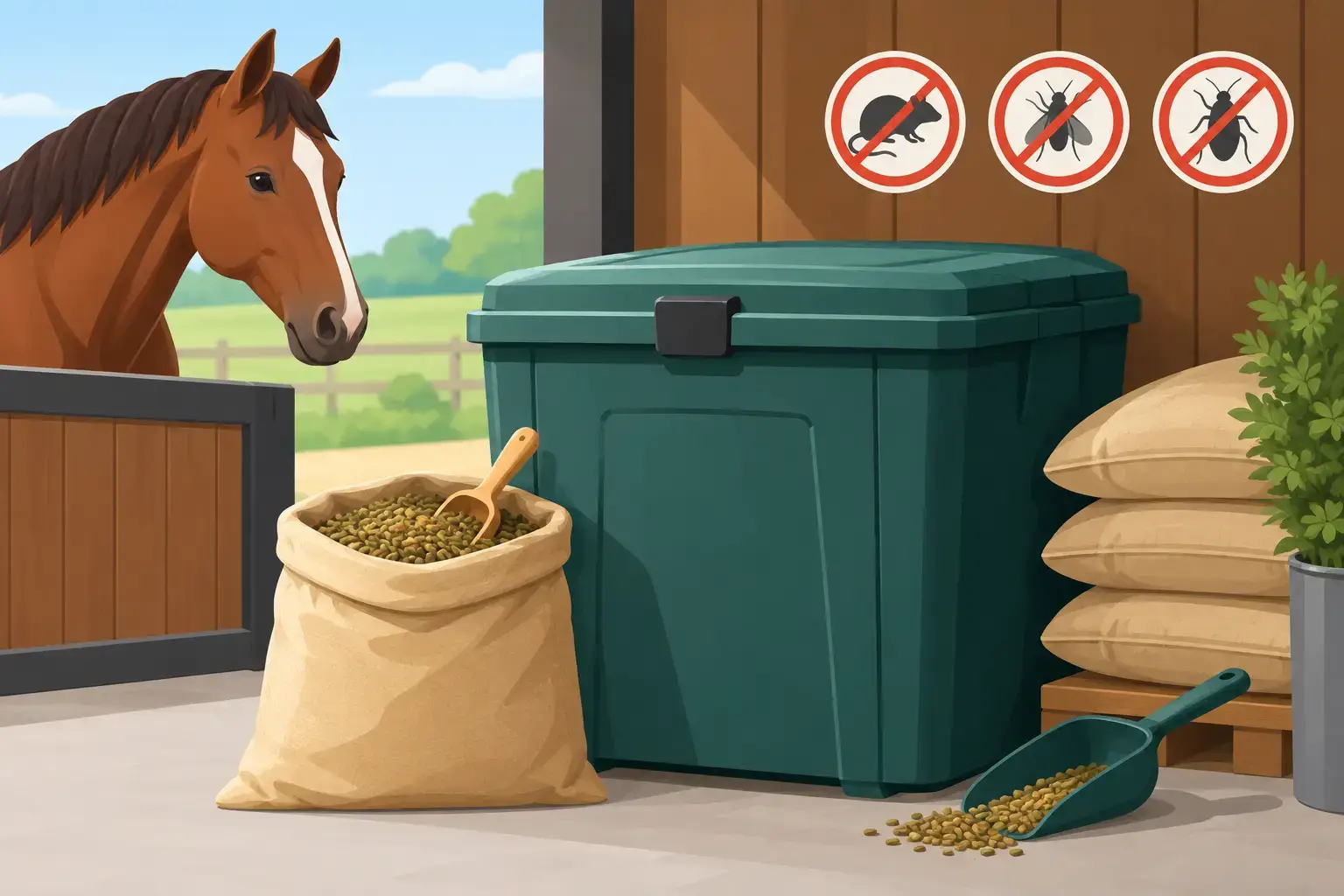
A secure container protects feed from mice, raccoons, barn cats, insects, and curious horses. Use a clean container with a tight-fitting lid that animals cannot pry open. Heavy-duty metal cans with secure lids and food-grade plastic bins are both practical choices for many barns.
If you transfer feed from its original bag into a bin, save the bag or cut out the product label. You will want the lot number, feeding instructions, ingredients, and expiration or best-by information if you have a question about the feed later. Label each container with the feed type and the date it was opened.
Some owners prefer to place the whole bag inside a large sealed bin. This can work well because the original label stays with the feed and the bag provides an additional barrier. The trade-off is that large bags can be awkward to lift and may make it harder to see crumbs or moisture collecting at the bottom of the container. Whichever method you choose, clean and fully dry containers between refills rather than continually pouring new feed on top of old feed.
Avoid using containers that previously held non-food products, even if they appear clean. Residue from chemicals or oils can make feed unsafe. A container should be dedicated to feed storage only.
Keep Different Feeds Separate
Do not mix grain, pellets, senior feed, supplements, and treats into one container. Horses often receive different rations based on age, workload, health, or pasture access, and a mix-up can create feeding problems. Separate containers also make it easier to monitor how quickly each product is being used.
For medications or supplements that need to be added individually, keep them in their original packaging and store them according to the label. They should be out of reach of children and animals, but not mixed directly into a bulk feed bin.
Control Moisture Before Mold Starts
Moisture is one of the quickest ways to spoil horse feed. Feed can clump, develop a musty smell, grow mold, or lose quality when it is stored in damp conditions. Heat can also speed up deterioration, particularly in feeds that contain added fats.
Keep containers closed whenever you are not actively scooping feed. Do not leave open bags in an aisle overnight, even if the barn seems secure. Humid air, dust, insects, and rodents can all find their way in.
A cool, shaded location is preferable to direct sun or a hot tack room. There is no single ideal temperature for every product, so follow the manufacturer’s label when it provides storage guidance. In general, a stable, dry environment is more useful than a space that gets very hot during the day and cold at night.
Never try to dry out damp, moldy, or questionable feed and then serve it. If feed smells sour, musty, rancid, or unusual, looks discolored, contains visible mold, feels warm or excessively clumped, or shows insect activity, do not feed it. When in doubt, discard the product and clean the storage container before adding fresh feed. The cost of replacing a bag is far lower than the potential cost of treating a sick horse.
Use First In, First Out Rotation
Feed storage works best when you buy quantities your horses will use while the product is still fresh. Buying in bulk can save trips and may be convenient for a larger barn, but it is not always the economical choice if bags sit through a humid season.
Place newer bags behind older bags, and use the oldest unopened bag first. This simple first in, first out routine prevents forgotten feed from settling at the back of the room. Write the purchase date on each bag with a marker if the printed date is difficult to find.
Check feed before every feeding, not only when you open a new bag. A quick look and smell takes seconds. It also gives you a chance to notice damaged packaging, droppings, chew marks, or a lid that was not closed properly.
Buy for Your Actual Feeding Schedule
A horse eating a small amount of concentrate feed each day may not need a month’s supply on hand. On the other hand, a multi-horse property with a consistent feeding program may benefit from larger quantities and well-labeled bins. Consider how much feed your horses consume, how much storage space stays reliably dry, and how often you can restock.
If you are changing feeds, avoid opening several large bags at once unless you have a clear reason. Keeping too many products open makes rotation harder and increases the chance of feeding the wrong ration. Transition horses gradually according to your veterinarian’s or nutrition professional’s recommendation.
Keep Pests From Finding the Feed Room
Pest control begins with denying pests an easy meal. Secure lids, prompt cleanup, and a sealed building make the biggest difference. Inspect around doors, vents, and wall openings for gaps that allow rodents inside. Repair damaged screens and keep vegetation trimmed back from the building when possible.
Do not leave feed scoops resting in open bags or bins. Store a clean scoop inside the closed container or hang it nearby where it will stay clean. Using one scoop for every feed can cause accidental cross-contamination, so marking scoops for specific products is a practical habit in barns with multiple horses.
Be cautious with rodenticides and insect-control products around feed. These products must be used exactly as directed and placed where horses, pets, and children cannot access them. Never put pest-control products in or near an open feed container. If pest activity is ongoing, address the entry points and sanitation issues instead of relying only on traps or bait.
Make Feeding Safer With Simple Organization
A well-organized feed area makes the daily routine faster and helps prevent mistakes when more than one person feeds. Keep each horse’s ration written clearly on a chart or container label, including the amount, supplements, and special instructions. Update it whenever a horse’s diet changes.
Store hay, bedding, and feed with enough separation to keep the room manageable. Hay and bedding create dust and can conceal spilled feed, while a crowded room makes it harder to inspect bags and containers. Keep a broom, dustpan, and trash container nearby so cleanup happens right away instead of at the end of the week.
For busy horse owners, a regular restocking routine can prevent last-minute substitutions. LifeTime Pet can help local customers keep horse feed and everyday pet supplies on hand, whether you are managing one backyard horse or a fuller barn schedule.
A dry container, a dated bag, and a quick daily inspection may seem like small details. Together, they create a feed routine that protects your horses and keeps the barn easier to manage all year long.