
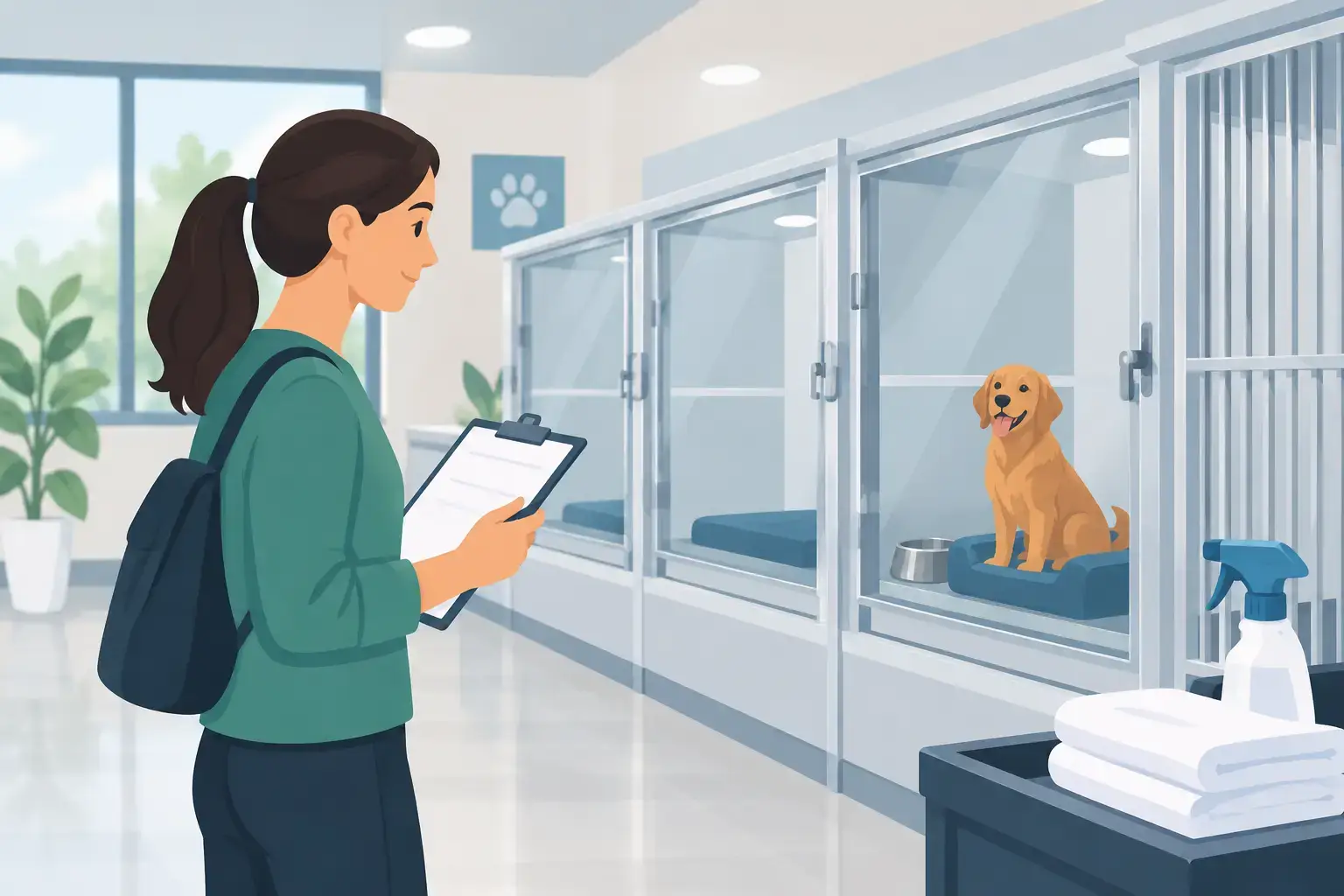
A clean lobby can make a strong first impression, but it does not tell you much about where your dog will sleep, eat, play, and take bathroom breaks. Knowing how to assess boarding cleanliness means looking past the front desk and asking practical questions about the routines that protect dogs throughout the day and night.
For Kansas City area pet owners, boarding is often needed during family trips, work travel, holidays, or unexpected changes in schedule. A good facility should welcome reasonable questions and give you a clear picture of how it keeps shared spaces, kennels, bedding, and outdoor areas clean. You are not looking for a place that smells like perfume or bleach. You are looking for one that is consistently cared for, properly ventilated, and managed by attentive staff.
How to assess boarding cleanliness during a tour
Whenever possible, visit before reserving a stay. A tour is not about expecting a spotless, silent building with no sign that dogs live there. Dogs bring in dirt, shed hair, spill water, and have accidents. The better question is whether staff handle those realities promptly and methodically.
Start with your senses. A mild animal smell can be normal in any active dog care setting, particularly near play areas. Strong urine odor, heavy fecal odor, stale air, or overpowering fragrances deserve a closer look. Air fresheners can cover a problem instead of solving it. Fresh air circulation and regular cleaning should make the building feel comfortable without needing to mask odors.
Look at the floor edges, kennel doors, drains, corners, and water bowls. These are the places where rushed cleaning tends to show. Floors do not need to look brand new, but they should be free of standing water, obvious waste, slippery residue, and buildup along walls or gates. Bowls should look clean and be stored in a way that prevents mix-ups between dogs.
Pay attention to bedding, too. Ask whether the facility supplies bedding, allows items from home, or both. Clean bedding should be dry, free from strong odor, and changed between boarding guests. If a dog soils bedding during a stay, staff should have a plan to replace it quickly rather than leaving the dog uncomfortable.
Watch the staff workflow
Cleanliness depends less on a single deep-cleaning day and more on what happens between those larger tasks. During a visit, notice whether staff have easy access to cleaning supplies, whether waste is picked up promptly, and whether employees wash or sanitize their hands as they move between tasks.
It is also reasonable to ask how staff separate cleaning tools for different areas. A mop or scoop used in a bathroom area should not be used around food preparation or clean bedding. You do not need a chemistry lesson, but you should hear a confident, specific answer about daily cleaning, spot cleaning, and disinfection.
A busy facility may have dogs moving through halls, staff preparing meals, and normal noise from play. That activity is not a warning sign by itself. What matters is whether the team stays organized while caring for multiple dogs. Calm, purposeful staff behavior often tells you more than a perfectly staged tour.
Ask about sanitation, not just cleaning
Cleaning removes visible dirt. Sanitizing and disinfecting address germs that may remain on surfaces. A responsible boarding program needs both, especially when dogs share a building and may have different vaccination histories, ages, or health needs.
Ask what the cleaning schedule looks like on a typical day. Kennels should be checked and cleaned as needed throughout the day, with a more complete reset between guests. Food and water bowls need regular washing. Indoor play areas, gates, and high-touch surfaces need attention because they are used by many dogs. Outdoor relief areas should be picked up frequently and maintained so waste does not accumulate.
The exact products a facility uses can vary. Some disinfectants need a surface to remain wet for a set amount of time before they work, while others are selected for speed or safety around animals. The key is that employees are trained to use products correctly and keep dogs away from treated areas until they are safe and dry.
Ask how the facility handles an accident, diarrhea, vomiting, or a suspected contagious illness. No boarding provider can promise that every dog will remain healthy in a group environment. Dogs can be contagious before symptoms are visible. Still, a clear response plan reduces risk: isolating affected dogs when appropriate, cleaning the area right away, monitoring symptoms, and communicating with the owner.
Ventilation matters as much as surfaces
A room can look clean and still feel unhealthy if air does not move well. Good ventilation helps manage odors, humidity, hair, and airborne particles. On your tour, notice whether the air feels stuffy or damp, especially in kennel rows or indoor play spaces.
Ask whether the boarding area has dedicated ventilation, fresh-air circulation, or an HVAC system designed to support occupied animal spaces. You do not need to compare equipment models. You simply want to know that the facility treats air quality as part of everyday care rather than an afterthought.
Ventilation is especially worth discussing if your dog is older, has respiratory concerns, or is sensitive to heat. In Kansas weather, reliable temperature control is just as practical as clean floors. A comfortable dog rests better, and rested dogs tend to handle boarding more easily.
Check how dogs are separated and supervised
Cleanliness and safety overlap. A facility that groups every dog together without considering size, temperament, health status, or play style may have a harder time keeping spaces sanitary and calm.
Ask how dogs are assigned to boarding spaces and play groups. Individual housing should allow staff to clean one space without exposing another dog to waste or contaminated bedding. Food should be handled carefully, particularly for dogs with allergies or prescribed diets. Dogs that need medication, special feeding, or closer monitoring should have clear instructions attached to their care plan.
You can also ask about vaccination requirements and health screening. Requirements do not eliminate all risk, but they show that a boarding provider takes shared-space health seriously. A thoughtful intake process may include behavior information, vaccine records, emergency contacts, feeding directions, and medication details.
If your dog is new to boarding, consider a short trial stay or daycare visit first. This gives staff a chance to learn your dog’s routine and gives you a better sense of how the operation runs. It can also help your dog become familiar with the setting before a longer overnight stay.
Use your dog’s needs to guide the decision
The cleanest-looking kennel is not automatically the best fit for every dog. A social young dog may benefit from supervised activity and frequent breaks. A senior dog may need a quieter space, softer bedding, and more individual attention. A dog with anxiety may settle better when the facility follows a familiar feeding schedule and accepts a comfort item from home.
Be honest about your dog’s habits. Let the boarding team know if your dog has sensitive skin, digestive issues, accidents under stress, resource guarding, or trouble resting around other dogs. This information helps staff prepare the right space and cleaning plan. It also helps you avoid choosing a facility that is not set up for your dog’s needs.
When comparing options, do not rely only on price or online photos. Ask whether tours are available, how reservations work during busy periods, and who you can contact if plans change. A local, family-owned provider such as LifeTime Pet should be able to explain its process in plain language and help you make an informed reservation.
Trust clear answers and your own observations
A good boarding provider will not act offended by questions about sanitation. They understand that you are leaving a family member in their care. Clear answers, orderly spaces, attentive staff, and a reasonable plan for accidents and illness are all signs that cleanliness is built into daily operations.
Before you book, take a moment to picture your dog there after the tour. Can you explain where they will sleep, how they will get breaks, what happens if they make a mess, and how staff will reach you if something changes? When those answers feel straightforward, you can leave for your trip with more confidence and give your dog the comfortable stay they deserve.