
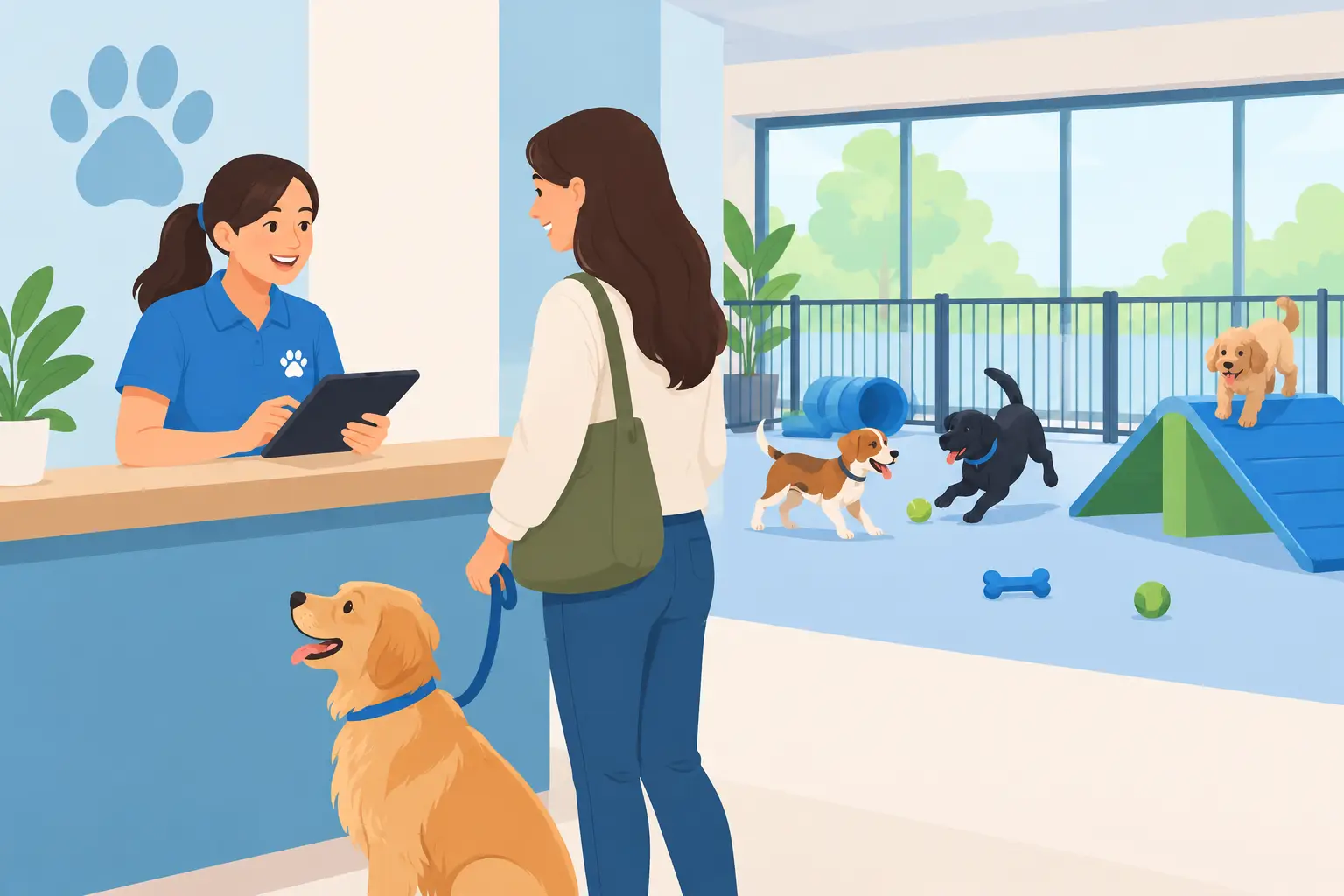
The first day of dog daycare should not feel like handing over a leash and hoping for the best. A good daycare enrollment example shows what a care team needs to know before your dog joins a group: health information, daily habits, social comfort, and the people authorized to make decisions. A few minutes spent preparing those details can make drop-off easier for you and more comfortable for your dog.
For Kansas City area families balancing commutes, school schedules, and busy workdays, enrollment is also a chance to find a care routine that actually fits. The right daycare asks thoughtful questions because every dog has a different play style, energy level, and adjustment period.
What daycare enrollment is meant to accomplish
Enrollment is more than paperwork. It gives the daycare staff a starting picture of your dog before the first full day of care. That helps them place your dog thoughtfully, watch for stress signals, follow feeding or medication instructions, and contact the right person if a question comes up.
Most facilities will also use enrollment to confirm that a dog is current on required vaccines and is a good fit for a supervised group setting. Requirements can differ by provider, so it is smart to ask for the current list before you arrive. Bring records early if possible rather than trying to sort them out during a rushed morning drop-off.
A temperament evaluation or introductory visit is often part of the process. This is not a test your dog has to “pass” by being the loudest, friendliest dog in the room. Staff are looking at how your dog responds to new people, new spaces, handling, and other dogs. A quieter dog may need a slower introduction. A high-energy dog may need more breaks and closer guidance. Both are useful things to know.
A practical daycare enrollment example
The exact form will vary, but the information below is a helpful daycare enrollment example to use when gathering what you will need. It also gives you a clear picture of the questions worth asking your care provider.
Owner and emergency contact details
Dog owner: Jordan Miller Phone: 913-555-0148 Email: jordan.miller@example.com Home address: Olathe, Kansas Emergency contact: Taylor Miller, 913-555-0192 Authorized pickup person: Morgan Lee, 913-555-0177 Veterinary clinic: Example Animal Hospital, 913-555-0110
The daycare should have at least one contact who can make timely decisions if you are in a meeting, traveling, or unreachable. Let the facility know if an authorized pickup person changes. It may seem like a small detail until a traffic delay or work emergency turns an ordinary afternoon into a last-minute pickup situation.
Your dog’s basic profile
Dog’s name: Scout Breed or mix: Labrador Retriever mix Age: 2 years Sex and spay/neuter status: Neutered male Weight: 58 pounds Microchip information: Provided to daycare Regular veterinarian: Listed above
Basic details help staff plan appropriate supervision and group placement. Size is one consideration, but it is not the whole story. A young, bouncy medium-sized dog may play differently from an older dog of the same size, and personality often matters just as much.
Health and care information
Vaccination records: Current records provided before first visit Flea and tick prevention: Monthly preventive, last dose date provided Medications: None Allergies or sensitivities: Sensitive stomach, no table food or unfamiliar treats Feeding instructions: Lunch provided by owner only if staying through midday; 1 cup of regular food Medical notes: No known injuries; notify owner if limping, vomiting, diarrhea, or unusual fatigue is observed
Be specific with health notes, even if they seem minor. If your dog gets an upset stomach after rich treats, say so. If a previous injury means your dog should avoid strenuous jumping, include that information. Clear notes give staff a better chance to maintain your dog’s normal routine and recognize when something is out of character.
Behavior and social history
Experience with other dogs: Has attended playgroups; enjoys calm, friendly dogs Play style: Chases, wrestles briefly, then takes breaks Comfort level with people: Friendly after a short greeting; may jump when excited Known stressors: Loud thunder and crowded entryways Handling notes: Comfortable with leash handling and gentle body checks Resource concerns: Eats meals separately; does not share chews Rest routine: Usually settles in a crate or quiet room after active play
This section deserves an honest answer, not an ideal answer. A daycare team is not helped by hearing that a dog is “great with everyone” if the dog becomes tense around food, is nervous with unfamiliar men, or needs a quiet break after play. Sharing those details is responsible dog ownership, not a reason for embarrassment.
What to bring to the first visit
Your provider may ask for certain documents in advance, but keep your first visit simple. Bring your dog on a secure leash with a properly fitted collar or harness. Have vaccine records and medication instructions ready, and label any food or approved items with your dog’s name.
Avoid sending favorite toys unless the daycare specifically requests them. In a group setting, toys can create excitement or possessiveness that does not show up at home. The same applies to treats. A facility may have its own feeding and treat policies to protect dogs with allergies or dietary restrictions.
If your dog is anxious in new places, practice a calm arrival. Give yourself extra time, keep your voice matter-of-fact, and avoid a long emotional goodbye. Dogs often take cues from us. A brief, confident handoff allows staff to start building trust right away.
Questions worth asking before you reserve care
Daycare is not one-size-fits-all, and a few direct questions can prevent mismatched expectations. Ask how dogs are evaluated before joining group play, how groups are supervised, and when dogs get rest breaks. Find out what happens if your dog seems overwhelmed or does not enjoy group play that day.
It is also reasonable to ask about reservation procedures, drop-off and pickup windows, meal handling, medication policies, and emergency communication. If you may need boarding later, ask whether your dog’s daycare experience can help make an overnight stay more familiar. Continuity matters, especially for dogs that take time to settle into new environments.
At LifeTime Pet, local dog owners can arrange daycare and boarding care alongside the everyday food and supply needs that come with caring for a dog. That kind of one-stop convenience can be useful, but the personal fit still matters most. Look for a team that is clear about its procedures and willing to talk honestly about your dog’s individual needs.
Help your dog adjust to a new routine
A first day can be tiring, even for a social dog. Plan for a quieter evening afterward. Your dog may sleep more than usual, drink extra water, or seem less interested in a long walk. Those can be normal responses to a day of new activity and stimulation.
If possible, start with a shorter visit rather than immediately scheduling several long days in a row. Some dogs settle quickly, while others benefit from a gradual routine. Watch how your dog behaves at home after daycare. A content dog may be tired but relaxed; a dog who seems persistently stressed, sore, or reluctant to enter may need a different schedule or a conversation with the care team.
Keep communication open after enrollment. Tell staff about changes at home, including a new medication, recent illness, an injury, or a disruption to your dog’s routine. The more consistent the information, the better the team can care for your dog.
The best enrollment form is not the one with the most boxes checked. It is the one that gives your dog’s caregivers a real, useful picture of who they are. Bring honest details, ask practical questions, and give your dog time to learn that daycare can become a familiar part of the week.