
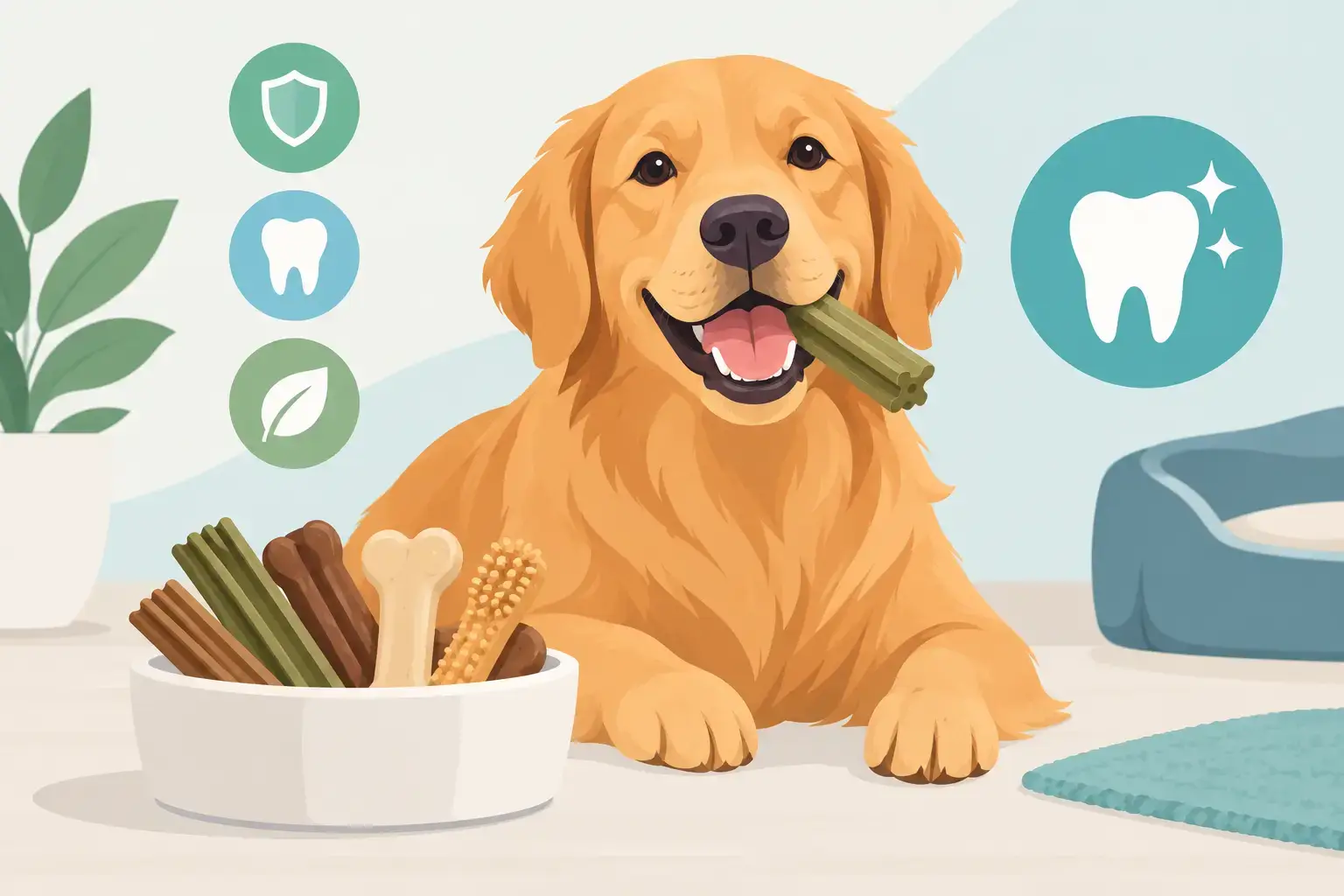
That unpleasant breath when your dog leans in for a hello is not always just a minor inconvenience. It can be a sign that plaque and tartar are building up along the gumline. The best dog dental chews can be a helpful part of home dental care, especially for busy Kansas City families, but the right choice depends on your dog’s size, chewing habits, health needs, and diet.
A dental chew is not a substitute for brushing or regular veterinary care. Still, when it is appropriately sized and used consistently, it can help scrub the tooth surface, freshen breath, and give your dog a satisfying activity. The key is choosing a chew your dog can handle safely rather than picking the biggest bag or the hardest option on the shelf.
Why dental chews can help
Plaque is a sticky film that forms on teeth after meals. If it is not removed, it can harden into tartar, irritate the gums, and contribute to periodontal disease. Dogs are good at hiding discomfort, so dental trouble may go unnoticed until breath becomes very strong, gums bleed, or eating habits change.
A well-designed dental chew creates gentle friction against the teeth as the dog bites and chews. Shapes with ridges, grooves, or flexible textures can reach more of the tooth surface than a smooth treat. Some chews also include ingredients intended to support fresher breath or reduce tartar buildup.
There is a trade-off, though. A chew only works on the surfaces it touches, and most dogs do not chew every tooth evenly. It also cannot clean beneath the gumline. Think of dental chews as a practical helper between brushings, not a complete dental plan.
What makes the best dog dental chews?
The best choice is usually one your dog will chew thoroughly, digest safely, and enjoy without adding more calories than their daily diet can support. Start with the package’s weight range, but use your own judgment too. A long-snouted, gentle chewer may manage a chew differently than a compact dog of the same weight who tries to swallow treats whole.
Match the chew to your dog’s size and style
Choose a chew made for your dog’s weight class and jaw strength. A chew that is too small can become a choking hazard. One that is too large or too firm may frustrate a small dog or make chewing difficult. Puppies, senior dogs, dogs with missing teeth, and dogs with sensitive mouths often do better with softer dental treats.
Watch the first few times your dog has any new chew. If they gulp it, break off oversized pieces, or struggle to chew it, that product is not a good fit. Supervision matters even for products labeled as digestible.
Very hard items deserve extra caution. Antlers, bones, hooves, and hard nylon products can be long-lasting, but they may crack teeth in some dogs. If you cannot make a slight impression in a chew with your thumbnail, ask your veterinarian whether it is appropriate for your dog. A costly dental repair is not worth a treat that lasts longer.
Look at the calorie count and ingredients
Dental chews are treats, and treats count toward the day’s food intake. This is especially relevant for dogs who are less active, prone to weight gain, or already receiving training treats, table scraps, or food puzzles. If your dog needs a dental chew every day, make room for those calories by adjusting meals when needed.
Read the ingredient panel with your dog’s individual needs in mind. Dogs with food sensitivities may need a limited-ingredient option or one without a protein they have reacted to before. Dogs with diabetes, pancreatitis, kidney concerns, or prescription diets should have treats approved by their veterinarian.
Some products use ingredients such as enzymes, minerals, or breath-freshening additives. These may be useful, but a clear ingredient list and a texture your dog can chew safely matter more than a long list of promises on the front of the package.
Consider products with recognized dental testing
Packaging can make nearly any treat sound like a dental solution. Look for products that have been evaluated for reducing plaque or tartar, such as those carrying the Veterinary Oral Health Council seal. That does not mean every other chew is ineffective, but it gives owners a useful starting point when comparing products.
A product can be effective and still be wrong for your dog. For example, a larger chew may meet dental standards but contain too many calories for a small dog. A softer chew may be safer for an older dog, even if it does not provide the same level of mechanical cleaning as a firmer option.
Use dental chews safely at home
Give chews when you can keep an eye on your dog, not as a quick goodbye treat while rushing out the door. Pick up small leftover pieces before they become a swallowing risk. Make sure clean water is available, particularly with drier chews.
If you have more than one dog, separate them during chew time when resource guarding is possible. Even friendly dogs may become protective around high-value treats, and a rushed dog is more likely to gulp.
Stop using a chew and contact your veterinarian if your dog coughs repeatedly, seems to have trouble swallowing, vomits after eating it, or develops diarrhea. Also pay attention to changes in appetite, pawing at the mouth, drooling, bleeding gums, or dropping food. These can point to a dental issue that a chew cannot solve.
Build a routine that does more than freshen breath
The most effective home routine is usually simple enough to repeat. Brushing your dog’s teeth with dog-safe toothpaste is the gold standard because it lets you clean along the gumline. Even a few brief brushing sessions each week can make a difference when your dog is learning to tolerate the process.
Start slowly. Let your dog taste the toothpaste, touch the outside of the teeth with a finger brush or soft pet toothbrush, and keep the experience calm. Follow with praise or a small reward. Dental chews can fit nicely into this routine on the days and times that match the product directions.
Regular veterinary exams remain essential. Your veterinarian can spot gum disease, loose teeth, fractures, and painful areas that are easy to miss at home. Bad breath that persists despite dental treats is a reason to schedule an exam, not simply switch to a stronger-smelling chew.
A practical choice for busy dog owners
For households balancing work, school, daycare drop-offs, and weekend plans, consistency is more valuable than chasing a perfect product. Keep an appropriate dental chew where you can use it safely, follow the serving guidance, and make dental care part of your dog’s regular schedule.
At LifeTime Pet, local dog owners can ask for help comparing chew sizes and options based on their dog’s age, diet, and chewing habits. Bring home a chew that fits your dog, then take a few minutes to watch how they use it. That small habit can help protect both their smile and their comfort for years to come.