
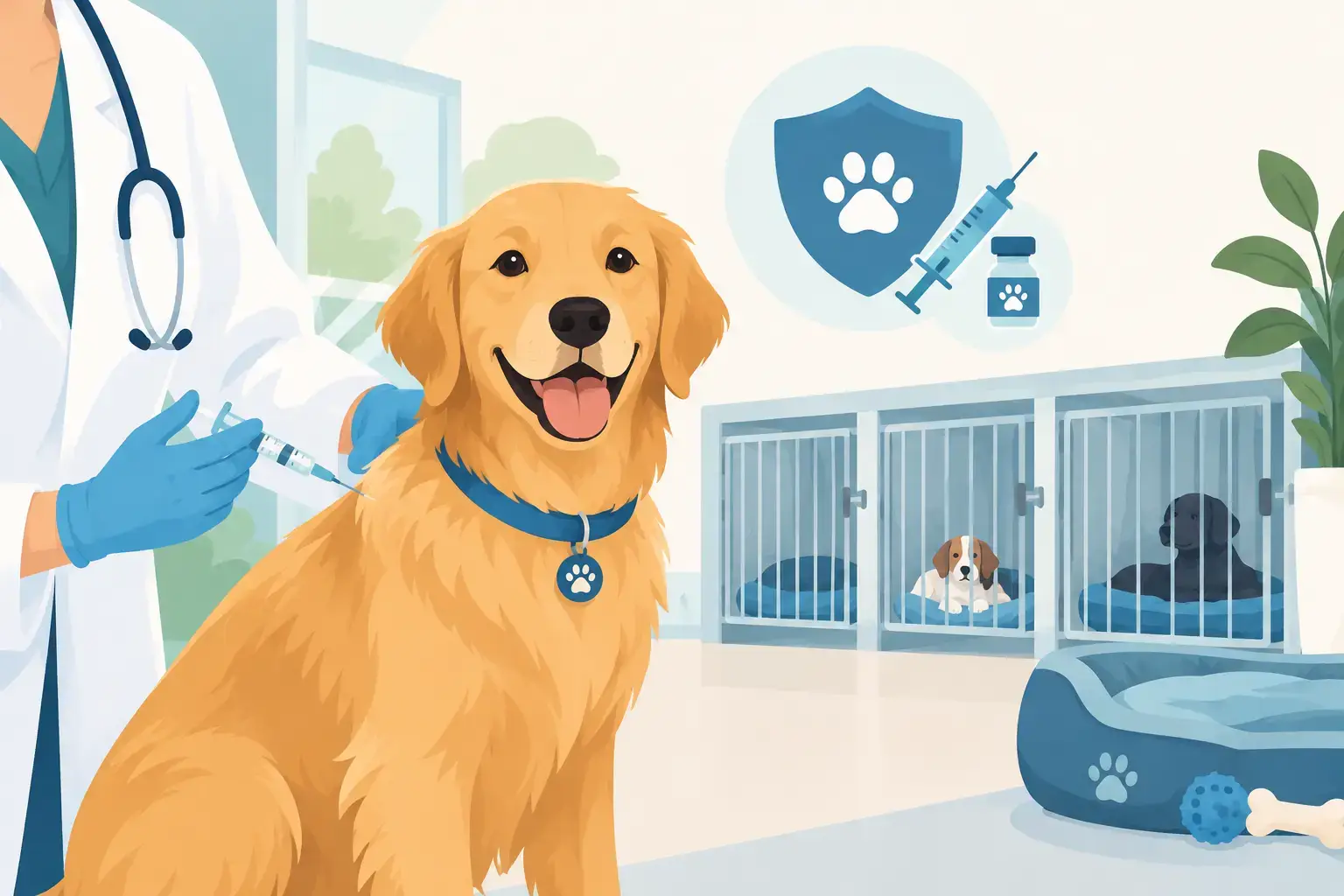
A boarding reservation is not the time to discover that your dog’s vaccine record is out of date. When families ask what vaccines dogs need for boarding, the answer usually starts with a few core protections, but the exact requirements can vary by facility, your dog’s age, health history, and local veterinary guidance.
For Kansas City area pet owners, the practical goal is simple: confirm the boarding policy early, give vaccines enough time to take effect, and bring clear documentation. That helps protect your dog, the other dogs in care, and the staff looking after them.
What Vaccines Does Your Dog Need for Boarding?
Most dog boarding facilities ask for proof of current vaccinations against rabies, distemper, parvovirus, and Bordetella. These are common requirements because dogs sharing a care environment may have close contact through play, walks, feeding routines, and common areas.
The vaccines most often requested include:
- Rabies: Required by law in many areas and essential protection against a fatal disease that can affect animals and people.
- DHPP or DAPP: This combination vaccine generally covers distemper, adenovirus or hepatitis, parainfluenza, and parvovirus.
- Bordetella: Often called the kennel cough vaccine, this helps reduce the risk of one common cause of contagious respiratory illness.
- Canine influenza: Some boarding and daycare settings require it, while others recommend it based on local activity and the level of dog-to-dog contact.
A facility may also ask about other preventive care, including a recent negative fecal test, flea and tick prevention, or heartworm prevention. These are not vaccines, but they can be part of a responsible health policy. Always follow the requirements provided by the boarding location rather than assuming every facility follows the same list.
Why Boarding Facilities Have Vaccine Rules
Vaccination policies are about more than checking paperwork at drop-off. Boarding brings together dogs from different homes, neighborhoods, parks, and travel histories. Even a clean, carefully supervised facility cannot eliminate every health risk when dogs are around one another.
Vaccines help reduce the chance of serious illness and limit how widely certain infections can spread. They are especially valuable for puppies, senior dogs, dogs with underlying health conditions, and dogs that regularly attend daycare, training classes, grooming appointments, or dog parks.
That said, vaccines do not create a zero-risk environment. A vaccinated dog can still occasionally become ill or carry certain respiratory germs without showing obvious symptoms. Good boarding care also depends on health screening, cleaning procedures, thoughtful group management, fresh air, staff observation, and keeping sick dogs separate from the general population.
Timing Matters More Than Many Owners Expect
Do not wait until the day before a trip to call your veterinarian. Some vaccines need time before they provide meaningful protection, and some facilities have waiting periods after a new vaccine or booster.
Bordetella is a common example. Depending on the form your veterinarian uses, it may be given by nose, mouth, or injection. The timing for effectiveness can differ by product, and a boarding facility may have its own rule about how many days before arrival it must be administered. Rabies and DHPP boosters may also need to be current well ahead of check-in.
If your dog is overdue, is a puppy completing an initial vaccine series, or has never received a particular vaccine before, speak with your veterinarian as soon as travel is planned. A vet can explain what protection is appropriate for your dog and whether boarding on your preferred dates makes sense.
It is also wise to avoid scheduling optional vaccines immediately before a stressful trip when possible. Most dogs do well, but some may be tired or sore afterward. Giving yourself a little extra time lets you monitor how your dog feels before boarding.
Bring the Right Vaccine Records
Your veterinarian’s office can usually provide a vaccine certificate or medical record by email or print it for you. Before your dog’s stay, make sure the document clearly shows your dog’s name, the vaccine name, the date given, and the expiration or due date when applicable.
A quick photo of an old tag is not always enough. Tags can be lost, and they may not show all required vaccines or dates. Save a current copy of your dog’s records on your phone and keep a printed copy with your travel paperwork. If someone else is dropping off your dog, send them the documentation in advance.
It helps to confirm whether the boarding location needs records submitted before check-in. Sending them early gives staff time to review any questions and keeps drop-off from becoming a last-minute scramble. At LifeTime Pet, making arrangements ahead of time helps the care team prepare for each dog’s stay and supports a smoother arrival for everyone.
Vaccines Are Only One Part of Boarding Readiness
A current vaccine record is essential, but it is not the whole preparation plan. Let the boarding team know about medications, allergies, special feeding instructions, mobility concerns, anxiety triggers, and any recent changes in your dog’s behavior or health.
Be direct if your dog has had coughing, sneezing, diarrhea, vomiting, unusual tiredness, or reduced appetite in the days before boarding. It can be disappointing to adjust travel plans, but bringing a sick dog into a group-care setting can put other dogs at risk and may make your own dog feel worse. A responsible facility may ask that a dog stay home or receive veterinary clearance first.
For dogs taking medication, provide the medication in its original labeled container and include clear dosing instructions. Bring enough food for the full stay if your dog is on a specific diet, along with a little extra in case travel plans change. Familiar food can help prevent stomach upset during an already different routine.
Special Considerations for Puppies, Seniors, and Dogs With Health Needs
Puppies are not automatically ready for boarding just because they are energetic and social. They need to complete the vaccine schedule recommended by their veterinarian, and their immune systems are still developing. Some boarding facilities have age limits or additional requirements for young dogs.
Senior dogs may have current vaccinations but need a more individualized conversation. Arthritis, hearing loss, vision changes, daily medication, or a lower tolerance for busy group activity can affect the best boarding arrangement. Ask how rest time, feeding, medication administration, and observation are handled.
Dogs with immune-related illnesses, a history of vaccine reactions, or complex medical needs should always be discussed with a veterinarian before boarding. The right choice may be standard boarding with extra instructions, a quieter arrangement, in-home care, or veterinary-supervised boarding. There is no one-size-fits-all answer, and the safest option depends on the dog.
A Simple Pre-Boarding Checklist
About two to four weeks before your trip, check your dog’s vaccine due dates and call the boarding facility for its current policy. This gives you time to schedule veterinary care if needed. A few days before departure, confirm your reservation, submit records, pack food and medications, and update your emergency contact information.
On drop-off day, keep the handoff calm and brief. Dogs often take cues from their people. A confident goodbye, accurate care instructions, and a current vaccine record give the boarding team what they need to focus on your dog’s comfort and safety.
Your dog’s health record may feel like one more travel detail, but getting it handled early leaves more room to focus on the reason for boarding in the first place: knowing your dog is cared for while you are away.