
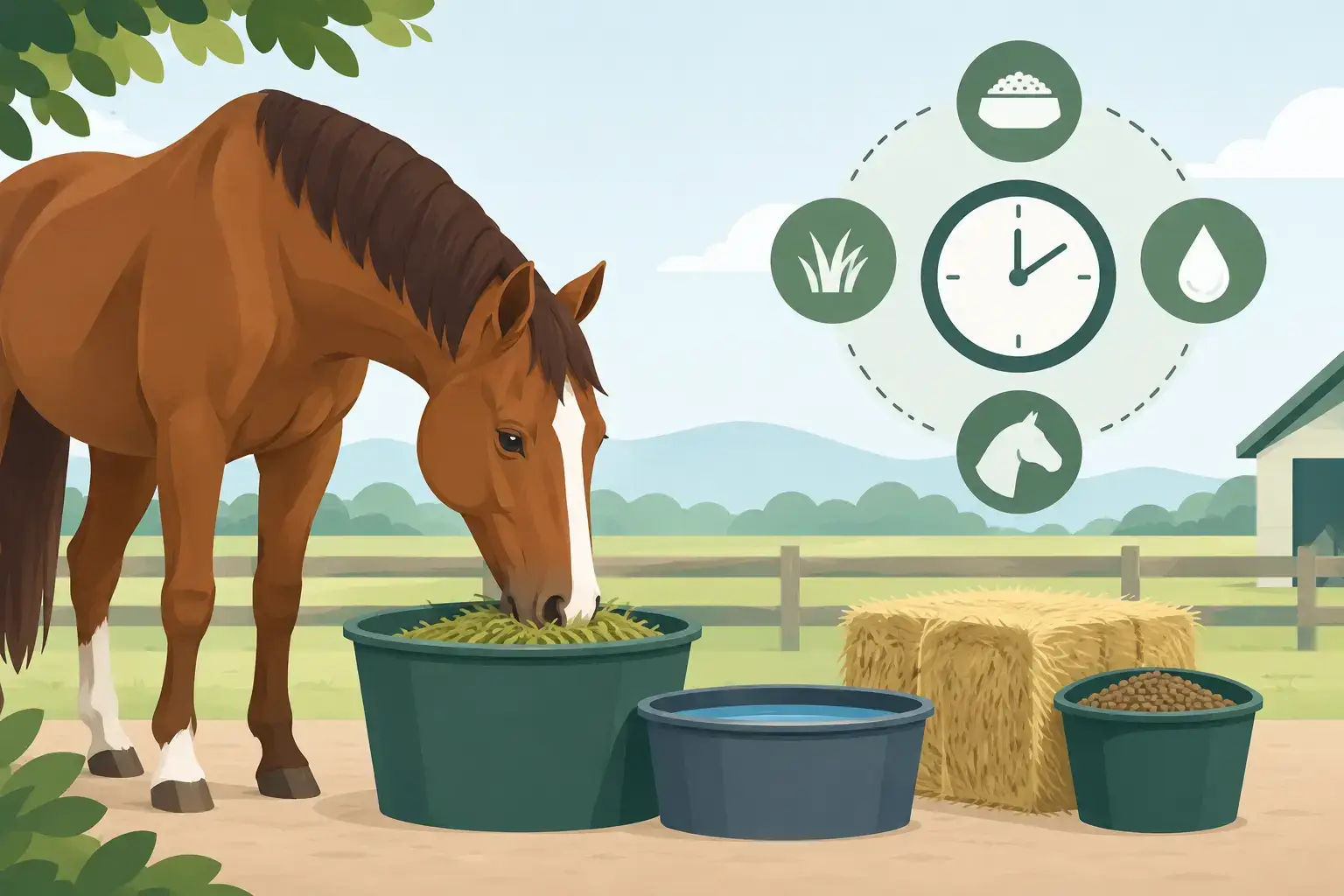
A horse that cleans up a large grain meal in minutes but stands for hours without hay is not on a comfortable feeding routine. Horses are built to graze and browse for much of the day, taking in small amounts of forage steadily. A practical horse feeding schedule guide starts there: protect forage access first, then fit concentrates, supplements, turnout, work, and barn chores around the individual horse.
The right schedule will look different for a retired easy keeper, a growing youngster, a hard-working performance horse, and a senior with dental concerns. What should stay consistent is the goal of supporting digestion, hydration, body condition, and calm daily behavior without abrupt changes.
Start With Forage, Not the Feed Scoop
Forage should make up the foundation of most horses’ diets. Good-quality hay, pasture, or a combination of both provides the fiber horses need to keep their digestive systems moving normally. As a general starting point, many adult horses need at least 1.5% to 2% of their body weight in forage each day on a dry-matter basis. A 1,000-pound horse may therefore need roughly 15 to 20 pounds of hay daily, though pasture intake, hay type, weather, workload, and individual health all affect the real amount.
The bigger concern is often not the total pounds fed, but the time between forage meals. Long gaps without hay can contribute to boredom, stall vices, and digestive discomfort. If your horse is stalled overnight or spends time in a dry lot, consider how long the last hay feeding must last. Slow-feed hay nets, multiple small hay portions, or a well-managed round-bale setup can help extend eating time. Use feeders designed and installed with safety in mind, and monitor horses that wear shoes or compete around a shared feeder.
Pasture is forage too, but it is not automatically a free-choice option for every horse. Spring grass can be especially rich, and easy keepers, insulin-dysregulated horses, and horses prone to laminitis may need controlled turnout or a grazing muzzle. On the other hand, sparse pasture may provide less nutrition than it appears to. Watch the horse’s body condition rather than assuming a green field meets every need.
Build a Horse Feeding Schedule Guide Around Consistency
Horses do best when meals arrive at predictable times. You do not need to feed at the exact minute every day, but a dependable routine reduces stress for horses and makes it easier for the people caring for them to notice when something changes.
For many barn-kept horses, a workable day includes hay or pasture available through most of the day, a morning check with fresh water and any concentrate meal, an afternoon forage check, and an evening feeding that carries the horse through the night. If a horse receives grain or a fortified feed, dividing the daily amount into two or more smaller meals is generally easier on the digestive system than feeding one large serving.
A sample schedule might be morning hay and a measured feed meal before turnout, a midday hay check or pasture access, then an evening meal with enough hay to last overnight. Horses in hard work, older horses that struggle to maintain weight, or horses with special medical needs may benefit from a third feeding. That decision should be based on the horse’s total ration and veterinary or equine nutrition guidance, not simply on a desire to add more calories.
The exact clock time matters less than avoiding long forage-free periods and keeping the pattern stable. If work, school, or travel makes a routine hard to maintain, prepare measured meals ahead of time and make sure everyone handling the horse understands the plan.
Feed Concentrates by Need, Not Habit
Grain and commercial concentrates can be useful, but not every horse needs them. A horse maintaining a healthy weight on appropriate forage may only need a ration balancer or a vitamin and mineral product, if recommended, rather than a full grain ration. Feeding extra concentrate because a horse seems eager at mealtime can create more calories and starch than the horse needs.
When concentrates are appropriate, weigh the feed with a scale instead of relying on a scoop. Different feeds have very different weights per scoop. Follow the manufacturer’s feeding directions as a starting point, then adjust based on body condition, workload, forage analysis when available, and professional guidance.
Make changes gradually. Switching hay, increasing grain, adding a supplement, or moving to richer pasture should usually happen over seven to 14 days. Sudden changes can upset the digestive system and make it harder to identify the cause if manure, appetite, or behavior changes.
Match Meal Timing to Work and Turnout
Avoid scheduling a large grain meal immediately before strenuous riding. Give the horse time to eat and settle before work. Light forage before exercise is often reasonable and may help avoid an empty stomach, but each horse’s workload and health status matter.
After riding, cool the horse down and make sure breathing and temperature have returned toward normal before offering a large meal. Fresh water should be available, and many horses will drink more readily after work once they have cooled down. In hot Kansas summers, consider checking water buckets and tanks more than once daily. A horse can drink far more than expected when temperatures rise, especially if it is sweating or eating dry hay.
Turnout also changes the schedule. A horse on productive pasture may need less stored hay during turnout, while a horse in a dry lot may need hay placed out before it becomes restless. If horses share turnout, make sure timid horses can access forage. A schedule only works if every horse actually gets to eat its intended share.
Water, Salt, and Daily Checks Belong in the Routine
Fresh, clean water is not an extra step. It is part of every feeding plan. Check water at least daily and more often during heat, freezing conditions, travel, illness, or heavy work. Scrub tanks and buckets regularly. Some horses drink less when water is icy cold, stale, or unfamiliar.
Most horses also need regular access to plain salt, commonly through a loose salt option or a salt block. Electrolytes may be helpful for horses sweating heavily, but they are not a replacement for water and should be used thoughtfully. If your horse has kidney concerns, metabolic disease, or another health condition, ask your veterinarian before changing electrolyte or supplement routines.
Use feeding time as a health check. Notice whether the horse approaches food normally, chews comfortably, finishes at its usual pace, drinks as expected, and produces normal manure. A horse that suddenly leaves feed, drops chewed hay, drinks much more or less, or has loose manure deserves attention. Call your veterinarian promptly if you suspect colic, choke, laminitis, or another urgent problem.
Adjust the Plan With the Season and the Horse
A feeding schedule should be reviewed whenever the horse’s circumstances change. Winter may increase calorie needs for horses living outdoors without adequate shelter, while reduced riding in winter may lower needs for another horse. Spring grass, summer heat, fall pasture changes, dental aging, pregnancy, and a new training program can all require adjustments.
Body condition is one of the most useful guides. Run your hands over the ribs, look at the neck and tailhead, and track weight with a tape on a regular schedule. Photos taken from the same angle every month can reveal gradual changes that are easy to miss day to day. If weight is changing unexpectedly, review forage quantity and quality before automatically increasing grain.
Senior horses deserve extra attention. Dental wear can make long-stem hay harder to chew, and some seniors do better with soaked hay pellets, chopped forage, or a senior feed designed to be fed as a complete ration. These changes should be made carefully, with veterinary and dental input when needed.
Keep the Routine Simple Enough to Follow
The best feeding program is one every caregiver can carry out accurately. Post the horse’s name, feed amounts by weight, medication or supplement instructions, hay timing, turnout notes, and any health restrictions where they are easy to see. Label containers clearly and keep feeds dry and secured from rodents, dogs, and curious horses.
For horse owners around Olathe and the Kansas City area, LifeTime Pet can help make routine feed pickups easier when you need dependable access to horse feed and supplies. Bring the feed tag or a photo of your current product if you need help finding the correct item.
Your horse’s schedule does not need to be complicated. It needs to provide steady forage, measured nutrition, clean water, and enough consistency that small changes stand out before they become bigger problems.