
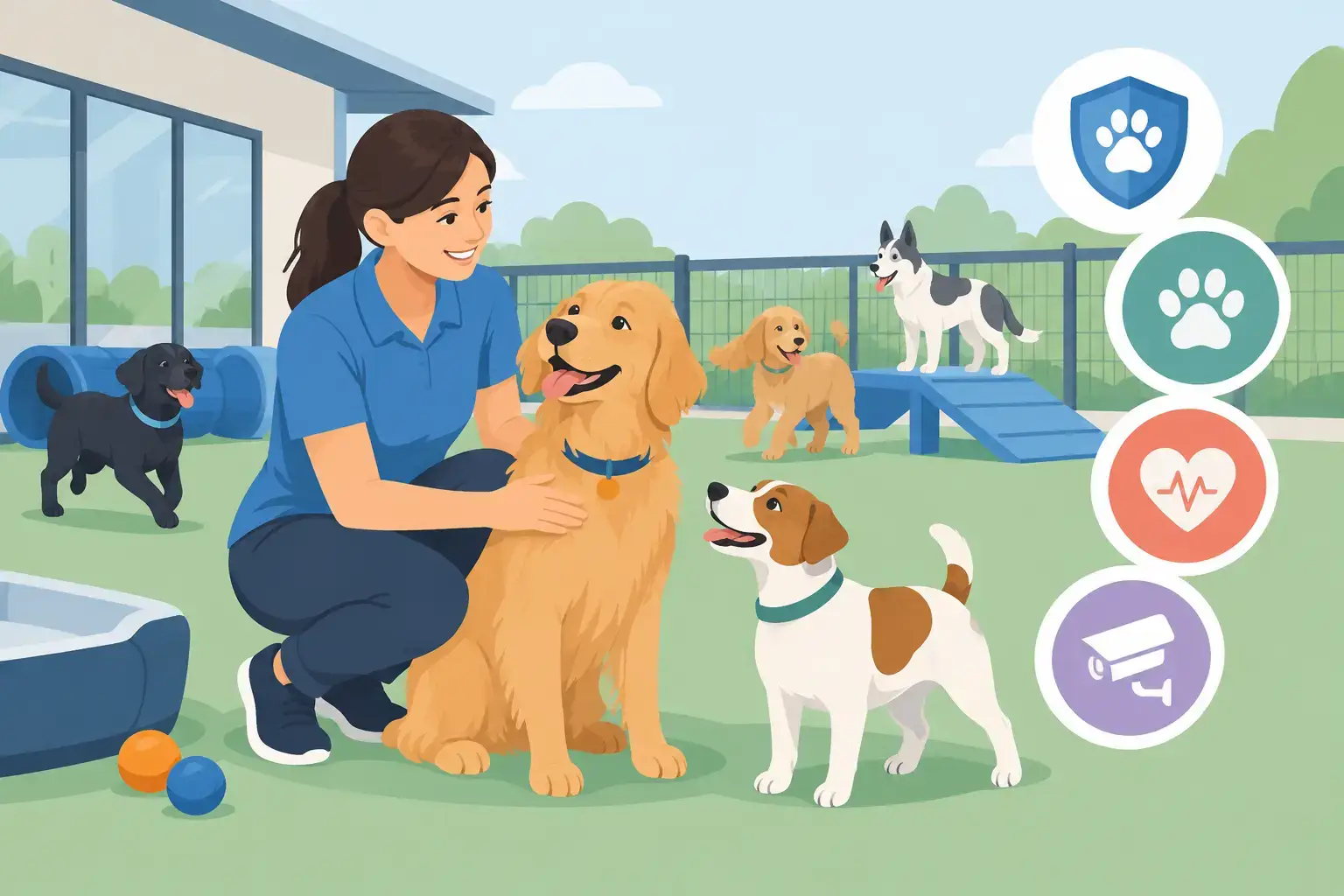
The right daycare pickup should end with a happy, pleasantly tired dog – not one that seems frightened, sore, overheated, or overwhelmed. Dog daycare safety comes down to more than a clean lobby or a convenient location. It depends on how a facility matches dogs, supervises play, handles rest, responds to changes in behavior, and communicates with families.
For busy Kansas City-area households, daycare can be a practical answer to long workdays, appointments, and dogs that need more activity than a quick backyard break provides. It works best when the environment fits the individual dog. A social, healthy, well-managed dog may enjoy regular group play. A very young puppy, an older dog, or a dog that finds groups stressful may need a slower introduction, shorter visits, or a different care arrangement.
Dog Daycare Safety Starts Before the First Visit
A responsible daycare should want to learn about your dog before placing them in a group. That begins with current vaccination requirements, but it should not stop there. Staff also need to understand your dog’s age, size, health considerations, past daycare experience, play style, and comfort level around unfamiliar people and dogs.
Ask how the facility evaluates new dogs. A thoughtful introduction gives staff a chance to observe body language, energy level, and social skills before a dog joins regular play. Some dogs enter a group confidently; others need time to settle in. There is no prize for rushing the process. A gradual approach can prevent an anxious dog from becoming overwhelmed and helps staff make better decisions about compatible playmates.
Be honest during this conversation. Mention past injuries, sensitivities, resource guarding, separation anxiety, or situations that make your dog uneasy. Good information allows the care team to plan appropriately. It is far safer to discuss a concern early than to hope it will not come up during a busy day.
Look Beyond the Playroom
Dogs do not spend every moment playing well together just because they are friendly at home. Safe daycare requires active management throughout the day. When you tour or speak with a facility, ask direct questions about how dogs are grouped and monitored.
Groups should generally take into account size, temperament, activity level, and play style. A gentle large dog may do well with other calm dogs, while a small, energetic dog may be happiest in a group that matches that pace. Size alone does not tell the whole story, but it can matter when play gets fast or physical.
Supervision also means more than having someone in the room. Caregivers should be watching for signs that play is becoming too intense, one dog is repeatedly trying to get away, or a dog is becoming overly focused on another. Healthy play usually includes loose bodies, pauses, and give-and-take. Stiff posture, relentless chasing, hiding, excessive mounting, or repeated yelping call for staff attention.
Ask how staff interrupt play, separate dogs when needed, and give them time to reset. A well-run daycare does not wait for a scuffle before stepping in. Early, calm intervention is part of everyday care.
Rest Is Part of a Safe Day
Dogs need breaks, even dogs that seem ready to play all afternoon. Without rest, excitement can turn into irritability, rough play, or exhaustion. Younger dogs in particular may keep going long after they need a quiet break.
Find out whether dogs have scheduled rest periods and access to a calmer space away from the group. The right routine varies. Some dogs thrive with a few active sessions separated by quiet time, while others prefer more frequent breaks. The goal is not to keep every dog busy every minute. The goal is to send them home content and comfortable.
Cleanliness and Health Procedures Matter
A clean facility helps reduce the spread of illness, but cleanliness should be an ongoing routine rather than a once-a-day task. Ask how play areas, water bowls, bedding, and common surfaces are cleaned and disinfected. You should also ask what happens when a dog shows signs of coughing, vomiting, diarrhea, or another possible illness during the day.
Vaccination policies are a key layer of protection, and a reliable daycare should clearly explain what records are required. Still, even vaccinated dogs can occasionally become sick. What matters is whether the facility notices symptoms promptly, separates the dog from the group when appropriate, contacts the owner, and follows a clear plan for cleanup and return-to-care guidelines.
Flea and tick prevention, parasite concerns, and seasonal illnesses are also worth discussing with your veterinarian. The best plan depends on your dog’s health, lifestyle, and time spent around other animals.
Questions That Help You Choose a Daycare
A friendly conversation can tell you a great deal about how a daycare operates. Before you reserve care, make sure you understand these practical details:
- How are new dogs screened and introduced to group play?
- How are dogs grouped, supervised, and given rest breaks?
- What training do caregivers receive in dog behavior and emergency response?
- What is the process for injuries, illness, medications, and owner notifications?
- Is there a plan for severe weather, power outages, or other unexpected disruptions?
Clear answers matter. You are not looking for a facility that promises nothing will ever happen. Dogs are active animals, and minor bumps or occasional disagreements can occur. You are looking for a team with sensible procedures, attentive caregivers, and the judgment to act quickly when something changes.
Watch Your Dog After Daycare
The first few visits are an adjustment period. Your dog may sleep more than usual after a day of activity, especially if daycare is new. That can be normal. But persistent limping, repeated diarrhea, unusual fearfulness, reluctance to enter the building, or extreme exhaustion deserve attention.
Pay attention to patterns rather than one isolated tired evening. Is your dog eager at drop-off? Do they recover comfortably after rest? Are they eating and drinking normally at home? If something seems off, talk with the daycare staff and share what you are seeing. A good provider will want that feedback and may suggest a shorter day, more rest time, or a different play group.
Daycare does not have to be an all-or-nothing routine. Some dogs do best attending once or twice a week, while others enjoy more regular visits. A dog that benefits from social play may still need quiet days at home. Matching frequency to your dog’s needs is another part of keeping care safe and enjoyable.
Prepare for a Smoother Drop-Off
Send your dog with any required records, medications, feeding instructions, and an emergency contact who can respond if you cannot. Keep instructions simple and current. If your dog has a dietary restriction, a health update, or a new behavior concern, mention it at check-in instead of assuming staff already knows.
It also helps to keep arrivals calm. A rushed, highly excited handoff can make settling in harder for some dogs. A consistent routine gives both your dog and the care team a better start to the day.
At LifeTime Pet, families can arrange supervised dog care while handling everyday pet supply needs in one familiar local stop. Whether daycare is an occasional help or part of your weekly routine, choose a setting that treats your dog’s comfort, health, and individual temperament as part of the plan.
The best sign of a safe daycare is not the loudest promise. It is a staff that asks good questions, notices small changes, and works with you to make each visit a good fit for your dog.