A larger bag of food can make busy weeks easier. For households juggling work, school, dog daycare drop-offs, or travel plans, bulk pet food means fewer last-minute runs for a bag of kibble. The savings can be real, but only when the food stays fresh long enough for your pet to finish it.
Buying more is not always the same as buying smarter. The right amount depends on how many animals you feed, their daily portions, the food’s shelf life, and the way you store it once you get home.
When Bulk Pet Food Makes Sense
Bulk buying works best for pets who eat the same food consistently and go through it at a steady pace. A family with two medium or large dogs may finish a large bag before quality becomes a concern. A single small dog, cat, or picky eater may be better off with a smaller bag, even if the price per pound is a little higher.
Start with the daily feeding amount on the package, then multiply it by 30. That gives you a reasonable estimate of one month’s supply. If a bag will last longer than four to six weeks after opening, consider whether you have a storage plan that will protect it from air, moisture, heat, and pests.
The same thinking applies to horse feed and other animal feed. Larger quantities can be practical for regular feeding routines, but feed should move through the barn or storage area often enough that it does not sit through changing weather, humidity, or pest activity.
There is also a convenience factor. Keeping an extra unopened bag on hand can be helpful before a holiday weekend or a busy travel season. It gives you a cushion without forcing you to open more food than your pet can use promptly.
Compare Cost Per Pound, Not Just Bag Price
A big bag often looks like the better deal, but the package price does not tell the whole story. Compare the cost per pound or per ounce between sizes. That is the clearest way to see whether the larger bag actually offers savings.
Still, the lowest cost per pound is not automatically the best value. If the last third of the bag goes stale, gets contaminated, or becomes something your pet refuses to eat, those savings disappear. Food that is thrown away is never a bargain.
It also pays to think about your pet’s current needs. Puppies and kittens change quickly as they grow. Senior pets may need a different formula over time. Dogs with sensitive stomachs, allergies, or veterinary diet recommendations should not be stocked up on a new food before you know it agrees with them. Buy a smaller bag first, make the transition gradually, and only purchase a larger size once the food is a dependable fit.
Watch the date before you buy
Check the best-by date and choose the freshest bag available, especially when buying a large size. The date matters because you need enough time to use the food before it expires, not just before you open it.
For dry food, the clock changes once the bag is opened. Exposure to oxygen can slowly affect flavor and quality, while heat and humidity speed up the process. Treats, supplements, canned food, and refrigerated items each have their own storage directions, so follow the label rather than assuming they all keep the same way.
How to Store Bulk Pet Food at Home
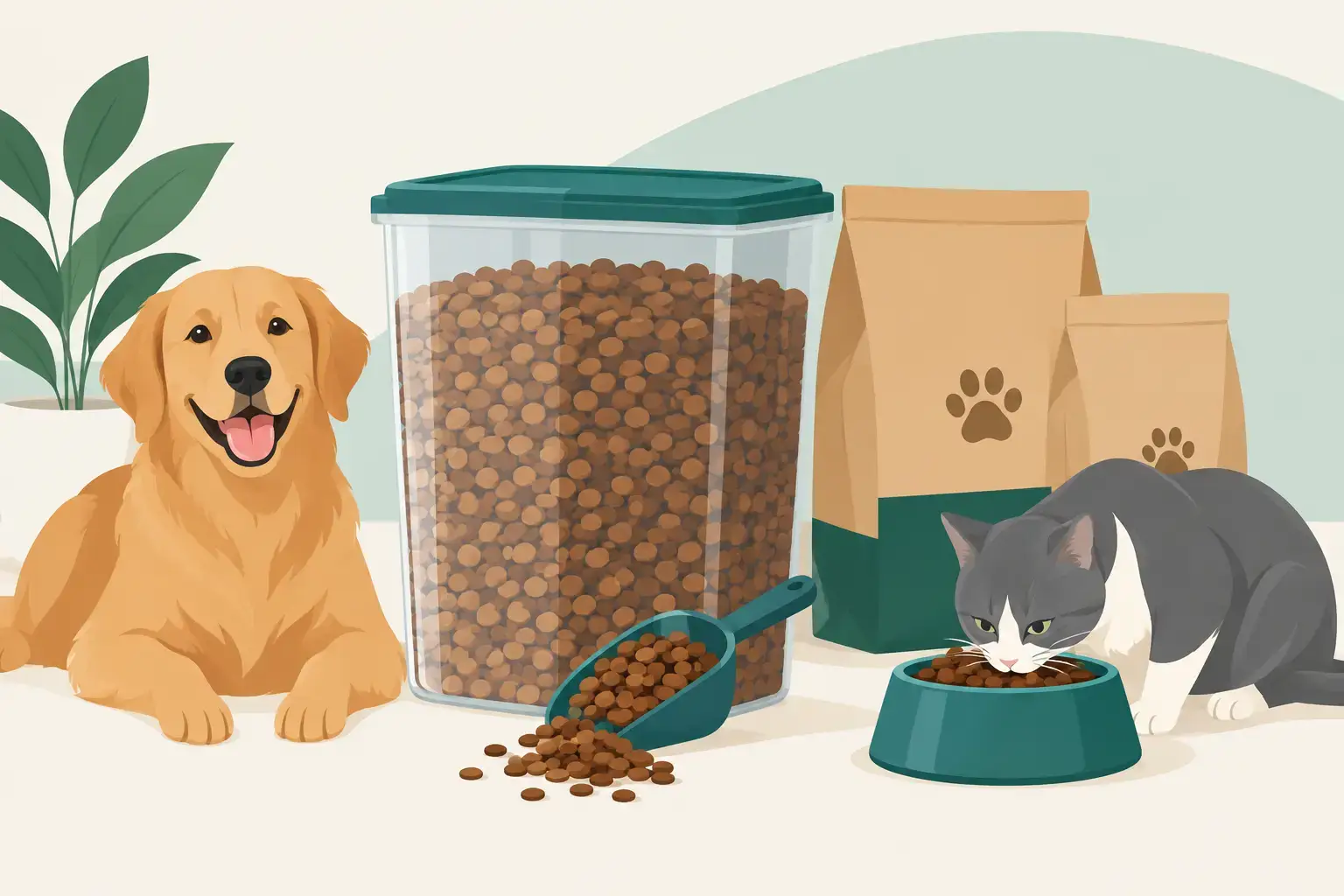
The original bag is more useful than many pet owners realize. It carries the lot number, expiration information, feeding guidance, and product details you may need if there is a manufacturer question or recall. For dry food, keep kibble in its original bag whenever possible, then place the entire bag inside a clean, food-safe container with a tight-fitting lid.
Squeezing out excess air and closing the bag well before putting it in the container helps protect freshness. Store the container in a cool, dry place away from direct sunlight. A temperature-controlled pantry, mudroom closet, or indoor utility area is usually a better choice than a hot garage, damp basement, or outdoor shed.
Do not pour a fresh bag on top of old kibble. Crumbs and oils can collect at the bottom of a bin, and older food can affect the new supply. Finish the existing food, wash and dry the container completely, then add the new bag. This simple habit prevents a surprising number of freshness and pest problems.
For households that use several bags a month, label containers with the date the bag was opened. You do not need an elaborate system. A piece of tape and a marker can help you see what should be used first.
Keep containers clean and pet-proof
A determined dog can chew through a bag or knock over a lightweight bin. Choose a container that closes securely and keep it where pets cannot help themselves. This is not just about a mess. A pet that overeats dry food may become very uncomfortable and could need veterinary attention.
Clean scoops regularly, too. A dedicated dry scoop prevents moisture or kitchen residue from getting into the food. Avoid reaching into the bag with wet hands, and never use a scoop that has been sitting outside or used for another type of feed.
Signs You Bought More Than You Can Use
Dogs and cats do not always reject stale food right away, so use your own senses as well. Dry food should smell normal for that formula and should not look oily, dusty, moldy, or clumped together. If the smell is rancid or noticeably different, do not try to use it up just because the bag is not empty.
Pets may also tell you something has changed. A dog that normally eats eagerly but begins walking away from the bowl, or a cat that suddenly refuses familiar kibble, may be reacting to the food, a health issue, or both. When in doubt, set the food aside and ask your veterinarian for guidance if your pet is unwell.
Treats can create the same issue on a smaller scale. A warehouse-sized bag of treats is only useful if you use treats often, share them among multiple pets, or can store them according to the package directions. For training, a smaller fresh bag may make more sense than a large bag that spends months in a cabinet.
Buying Food Around Daycare and Boarding Plans
A change in food is rarely a good idea right before your dog starts daycare, stays overnight, or spends time away from home. Switching diets too quickly can lead to digestive upset, and a familiar routine helps dogs settle more comfortably into care.
If your dog has a sensitive stomach, make sure there is enough of their regular food available before a boarding stay. Keep the original packaging or clearly label the food with your dog’s name and feeding instructions when requested. This makes it easier for care staff to follow the routine your dog knows at home.
For Kansas City families who prefer to handle food and care needs in one stop, LifeTime Pet can help make regular supply runs easier alongside daycare or boarding arrangements. The goal is simple: have the right food on hand before your schedule gets crowded.
A Practical Bulk-Buying Routine
The most reliable approach is to buy the amount your household can use while it is still fresh, then keep a modest backup rather than building a large pile of opened bags. Track how long one bag lasts for a month or two. Once you know that rhythm, you can plan purchases around paydays, trips, holidays, and busy work weeks without guessing.
It is also wise to keep a little flexibility. Manufacturers can change packaging, a pet’s appetite can shift, or your veterinarian may recommend a different formula. One unopened backup bag is useful. Several months of a single food can become a storage problem.
A full food bin should feel like one less thing to worry about, not another item on the household to-do list. Buy the quantity your pets can enjoy at their best, store it carefully, and let a dependable feeding routine do the rest.