A food scoop can look straightforward until you switch recipes, add training treats, or notice your dog gaining weight despite feeding the same amount. Learning how to measure dog food portions starts with one simple rule: use the food bag as a starting point, not a final answer. Every dog has a different metabolism, routine, and body condition.
The right portion helps support steady energy, healthy joints, easier movement, and a comfortable weight. It also helps you spot a change early, whether your dog needs a little more food during an active season or a little less after a quieter stretch at home.
How to Measure Dog Food Portions at Home
Start by finding the feeding guide on your dog food package. Most guides list a daily amount based on your dog’s current or ideal adult weight. That amount is usually for the entire day, not each meal.
For example, if the guide recommends 2 cups per day and your dog eats twice daily, serve 1 cup in the morning and 1 cup in the evening. If your puppy eats three meals a day, divide the daily recommendation into three smaller portions.
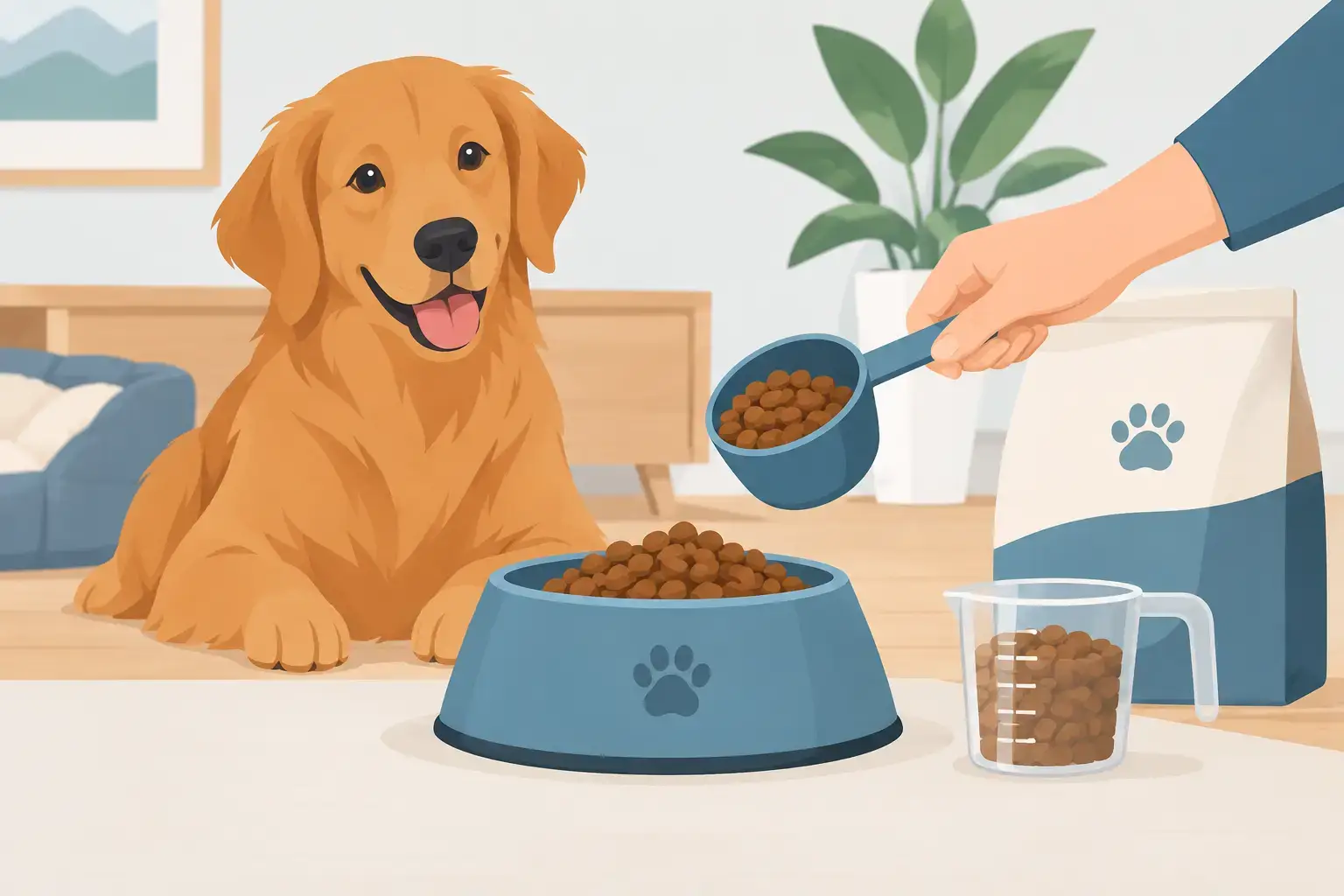
Use a standard dry measuring cup with clear cup markings. A kitchen scale is even more accurate, especially for small dogs or calorie-dense foods. Scoops that come inside a bag can vary quite a bit in size, so they are fine for serving only after you have measured what that scoop holds.
Wet food needs the same attention. Read the can or tray label for its calorie content and feeding recommendation. If you feed both wet and dry food, do not serve a full daily amount of each. The calories from both foods need to fit within your dog’s daily intake.
Check calories, not just cups
One cup is not a universal amount of nutrition. A cup of one dry food may contain 300 calories, while another contains 450 calories or more. That difference can add up quickly over a week.
Look for the calories per cup or calories per can on the package. If you change brands or formulas, compare calories before using the same old scoop size. This is especially helpful when moving from a regular adult formula to puppy food, senior food, weight-control food, or a high-performance recipe.
A food label’s feeding chart is a useful baseline because it is specific to that recipe. Still, charts are typically written for an average dog. Your dog’s actual needs may be above or below that range.
Start With Your Dog’s Ideal Weight
Portions should generally be based on the weight your dog should maintain, not necessarily the number currently on the scale. If a veterinarian has told you that your dog needs to lose weight, feeding for the current higher weight may continue the problem.
For dogs at a healthy size, you should be able to feel the ribs with light pressure without seeing every rib. From above, there should be a visible waist behind the rib cage. From the side, the belly should tuck up rather than hang straight down.
Breed charts and online calculators can offer broad estimates, but dogs of the same breed can have very different builds. A muscular Labrador and a stockier Labrador may weigh the same while needing different portions. When you are unsure of your dog’s ideal weight, ask your veterinarian for guidance before making a major feeding change.
Adjust for Age, Activity, and Daily Routine
A young, growing puppy uses food differently than a healthy adult dog. Puppies need a diet formulated for growth and usually eat more frequently. Large-breed puppies have particularly specific nutritional needs, so follow the food manufacturer’s guide and your veterinarian’s recommendation instead of trying to speed up growth with extra food.
Active adult dogs may need more calories, but activity means more than an occasional long walk. A dog that attends daycare regularly, hikes on weekends, works outdoors, or spends hours running and playing may burn noticeably more energy than a dog who enjoys a few relaxed neighborhood walks.
Senior dogs can go either direction. Some become less active and need smaller portions. Others lose muscle or have health concerns that affect their appetite and weight. A sudden change in eating, drinking, or body weight is a reason to call your veterinarian, not simply increase or reduce the scoop.
Weather and routine matter, too. A dog may be more active during a busy summer of walks and outdoor play, then settle into a quieter winter schedule. Boarding, travel, recovery from an injury, and a change in household routine can all affect calorie needs.
Count Treats and Table Food in the Daily Total
Treats are part of the portion. That includes training rewards, dental chews, peanut butter used for a toy, bite-size snacks from the kids, and leftovers shared at dinner. Small extras can become a meaningful number of calories, particularly for a little dog.
A practical goal is to keep treats to about 10 percent or less of daily calories unless your veterinarian recommends something different. You do not need to make every day perfect, but a high-treat training day should usually mean a slightly smaller meal.
For frequent training, set aside part of your dog’s measured kibble for rewards. You can also use very small pieces of approved treats rather than handing out a full-size treat each time. This keeps training positive without accidentally doubling the day’s intake.
Be careful with table food. Some people foods are unsafe for dogs, and rich foods can cause stomach upset even when they are not toxic. If your dog gets a special snack, keep it simple, small, and included in the day’s food plan.
Make Changes Gradually and Watch the Results
Once you have chosen a starting portion, feed that amount consistently for two to four weeks before deciding whether it is working. Weigh your dog regularly if possible, and pay attention to body shape, energy, stool quality, and hunger behavior.
If your dog is slowly gaining unwanted weight, reduce the daily food by a small amount, often around 10 percent, rather than making a dramatic cut. If your dog is losing weight unexpectedly or seems unusually hungry, talk with your veterinarian before assuming the portion is too small. Medical conditions, medications, parasites, and digestive issues can all affect weight.
When changing foods, transition over several days by gradually mixing more of the new food with less of the old food. A sudden switch can lead to digestive upset. Because the calorie level may be different, recheck the portion as you increase the new recipe.
Keep the routine easy to follow
Busy households do best with a simple system. Measure the whole day’s food into a labeled container in the morning, then use that supply for meals, treats, and food toys. Everyone in the home can see what has already been fed, which helps prevent the classic problem of two people serving breakfast.
If your dog goes to daycare or boarding, let the care team know exactly how much food to serve, how many meals your dog eats, and whether treats or toppers are part of the routine. Packing pre-measured meals can make instructions clear and help keep your dog on a familiar schedule.
For Kansas City area pet owners who need help reading a food label or comparing recipes, the team at LifeTime Pet can help you find the practical details on the bag. Bring your dog’s current food information and a recent weight, then use those details to build a feeding routine you can maintain every day.